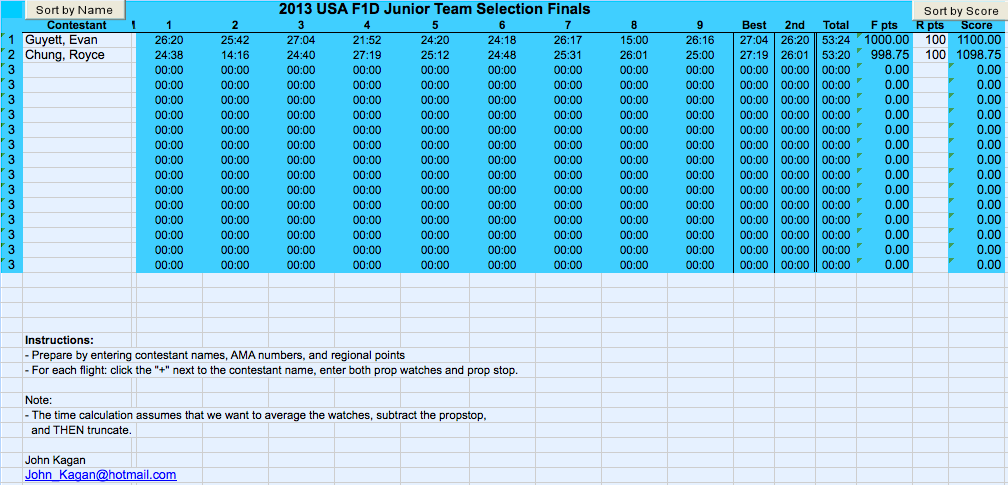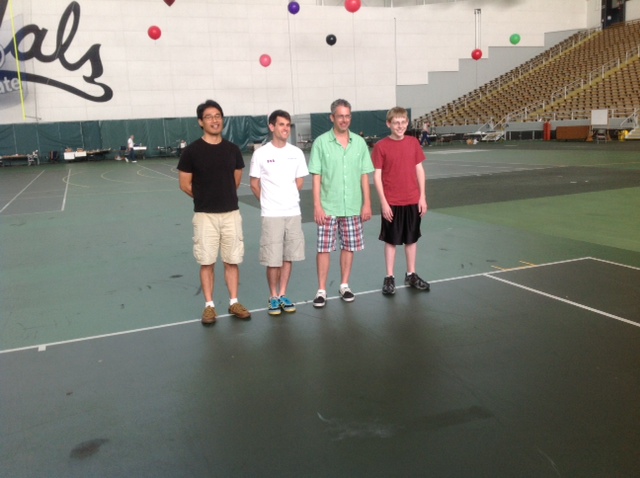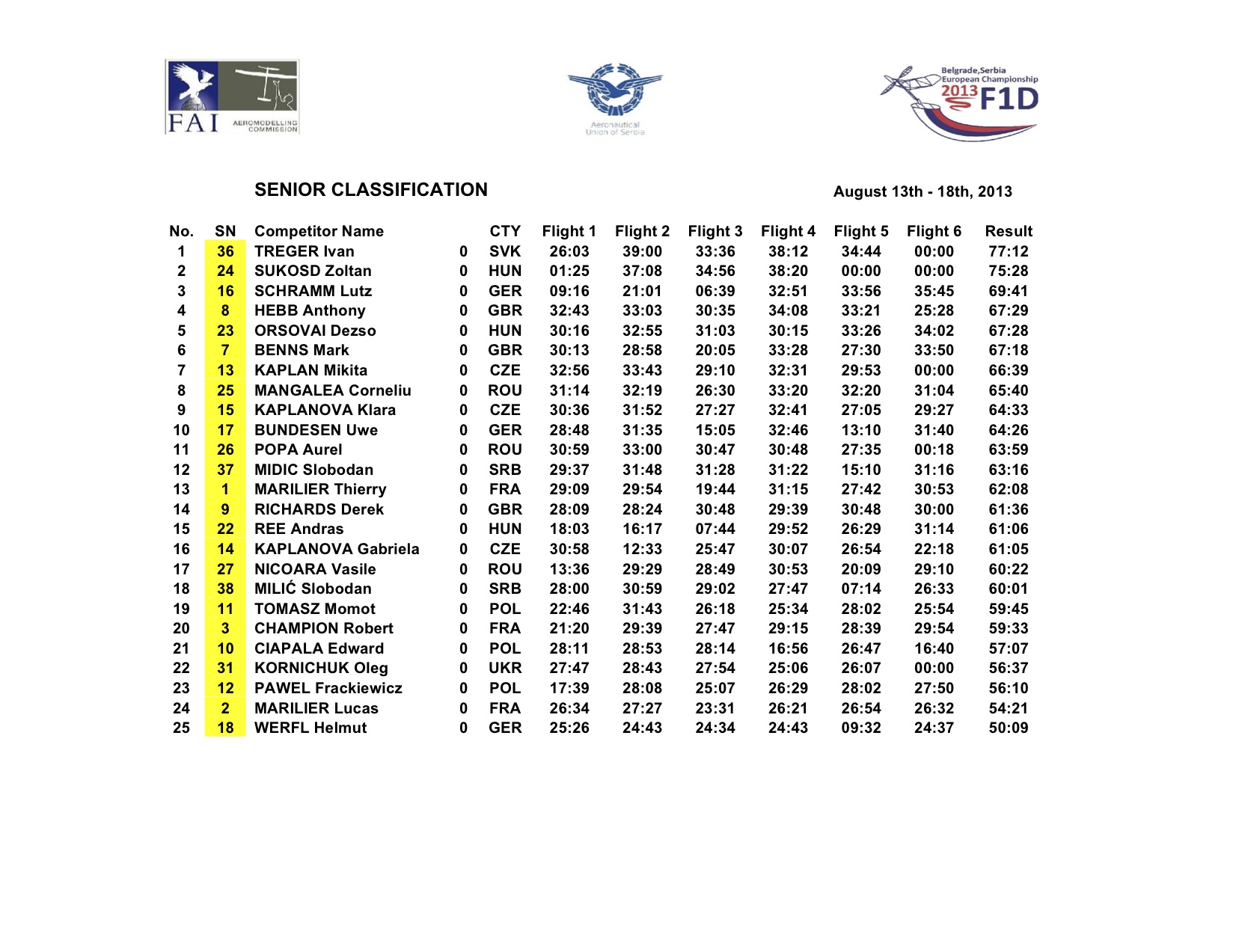
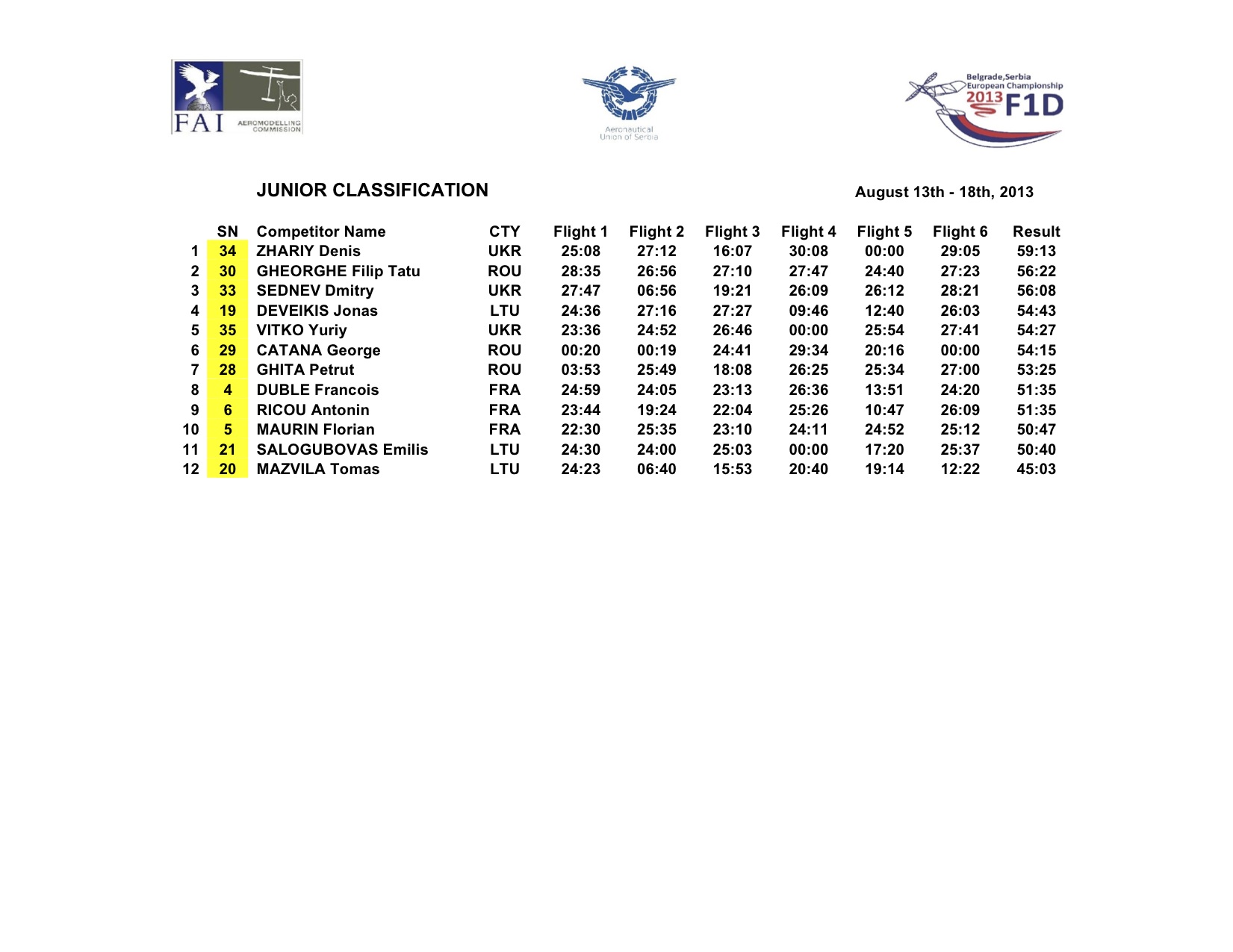
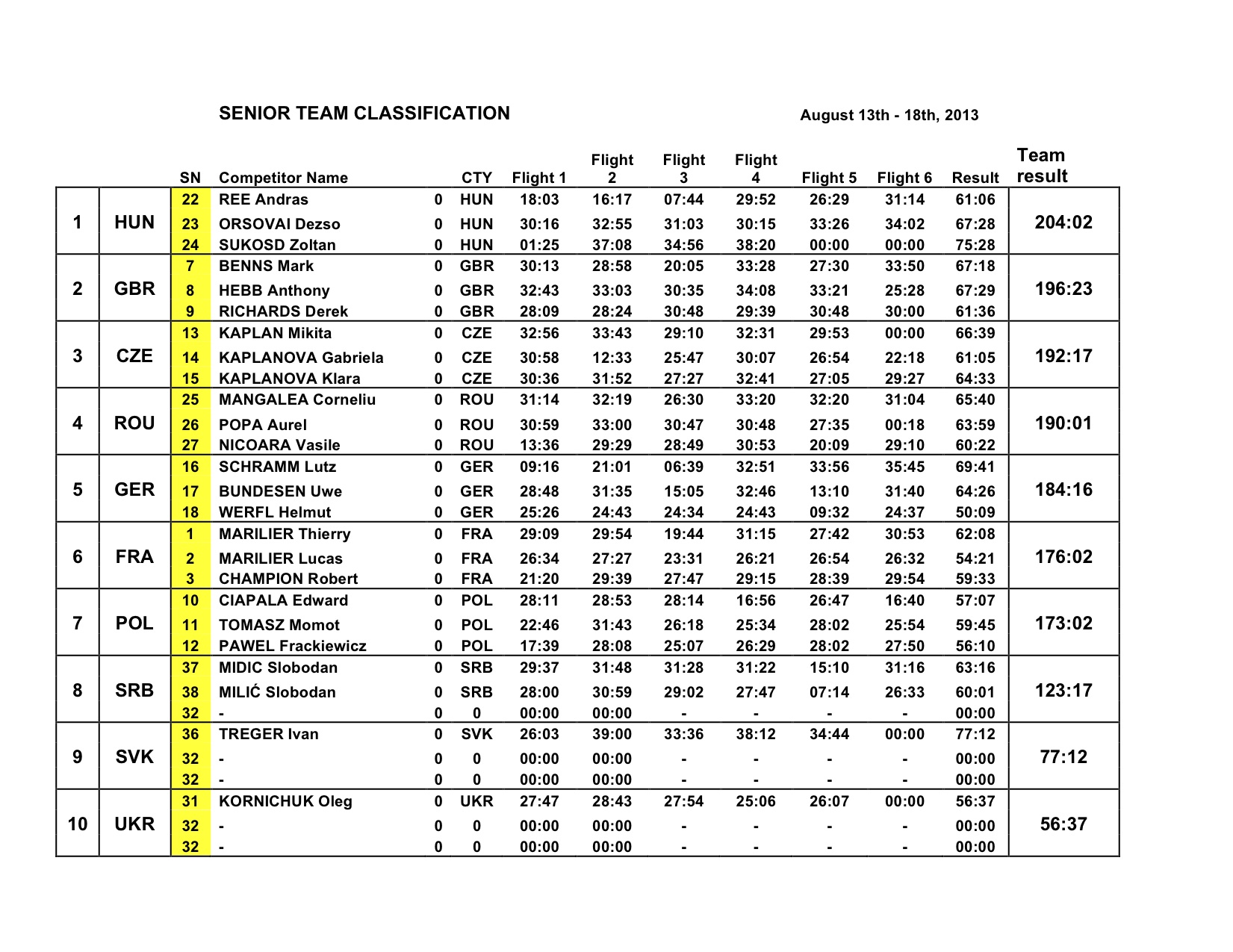
 Click here to download a copy of the results.


2013 USIC Reporting by Mike Kirda
Friday was HLS day and DonS had a beautiful model covered in microfilm.
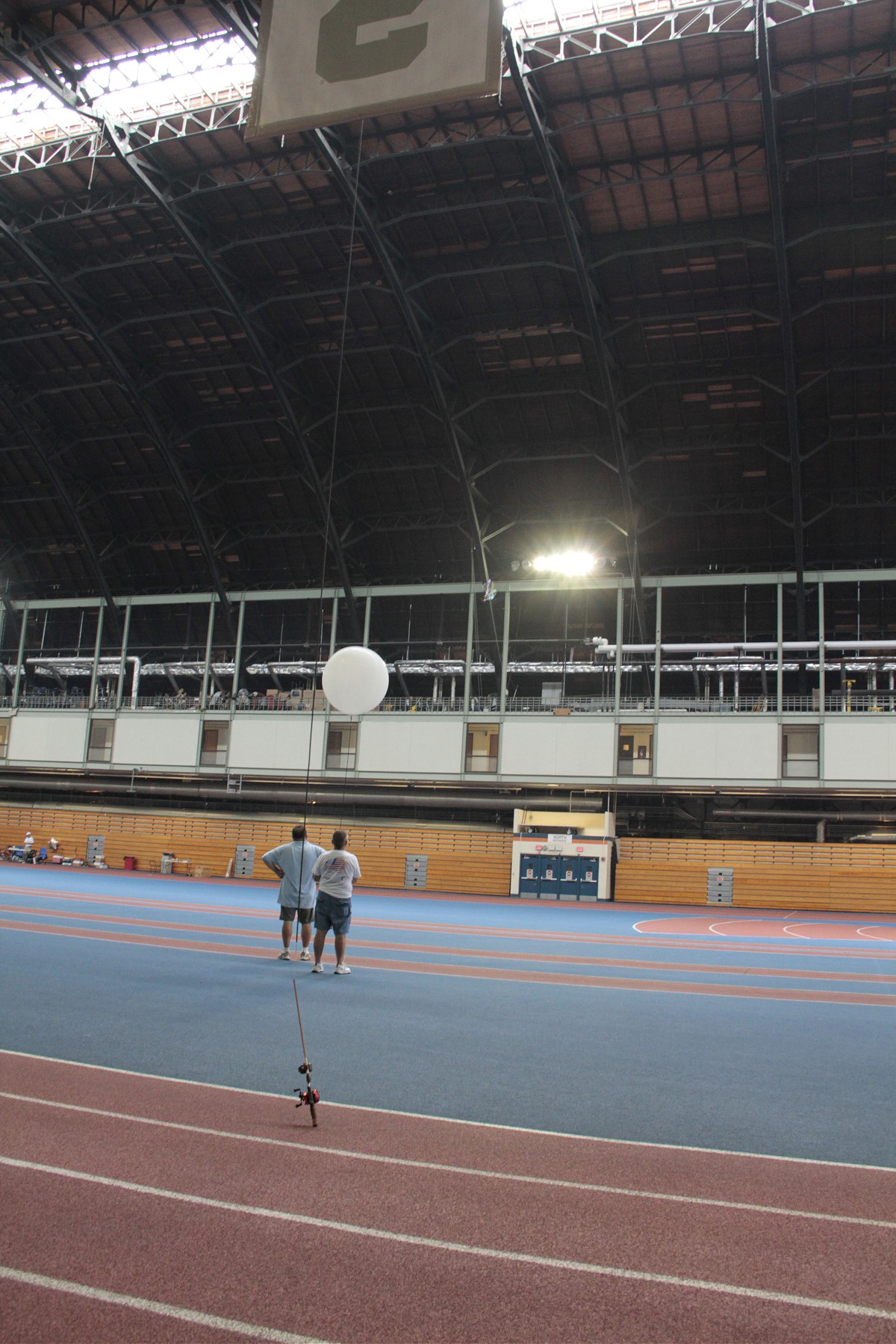
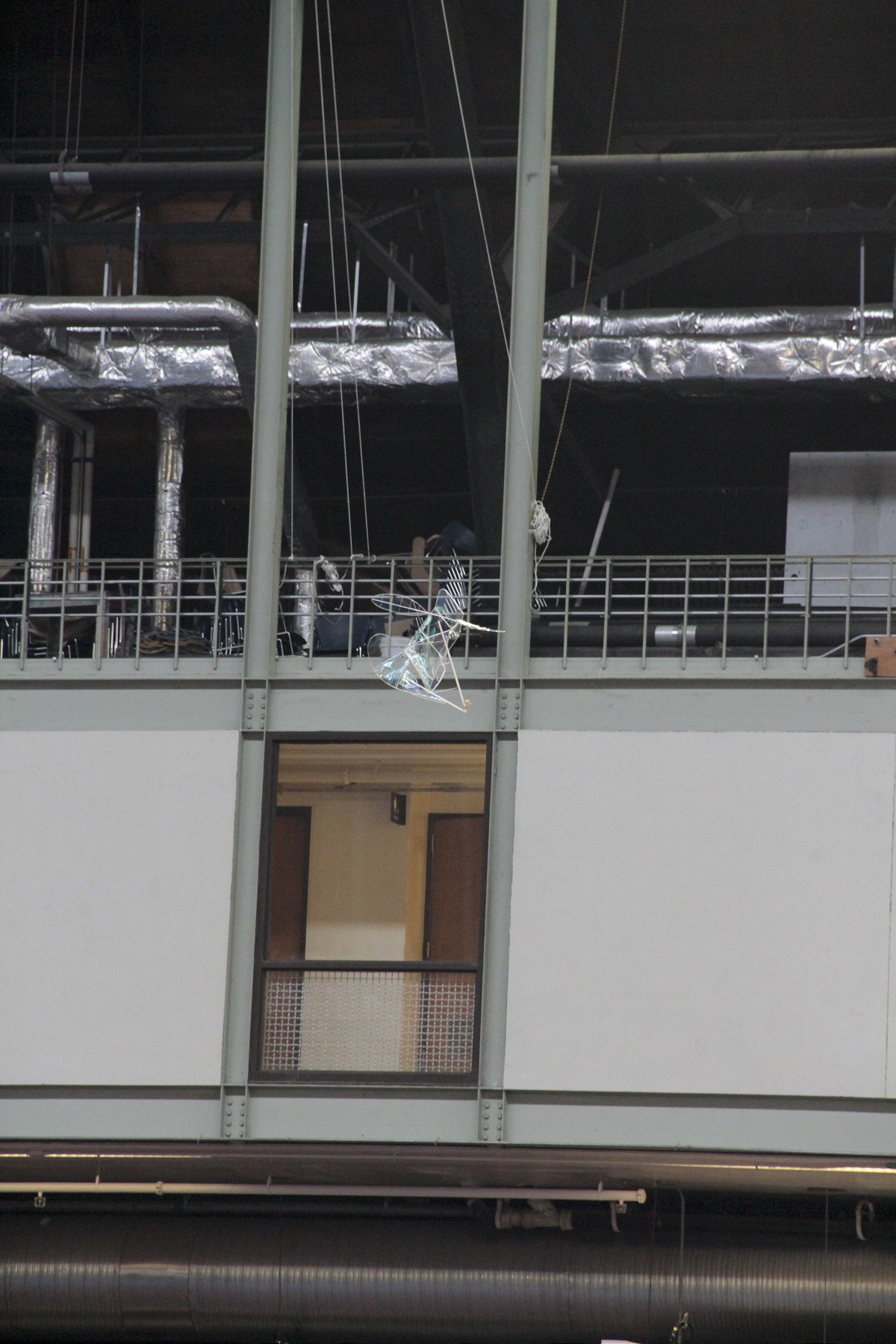
At one point it got hung up on one of the wires or chains hanging from the ceiling. I grabbed my camera and took a sequence of photos as it was successfully recovered with minimal damage to the wing.

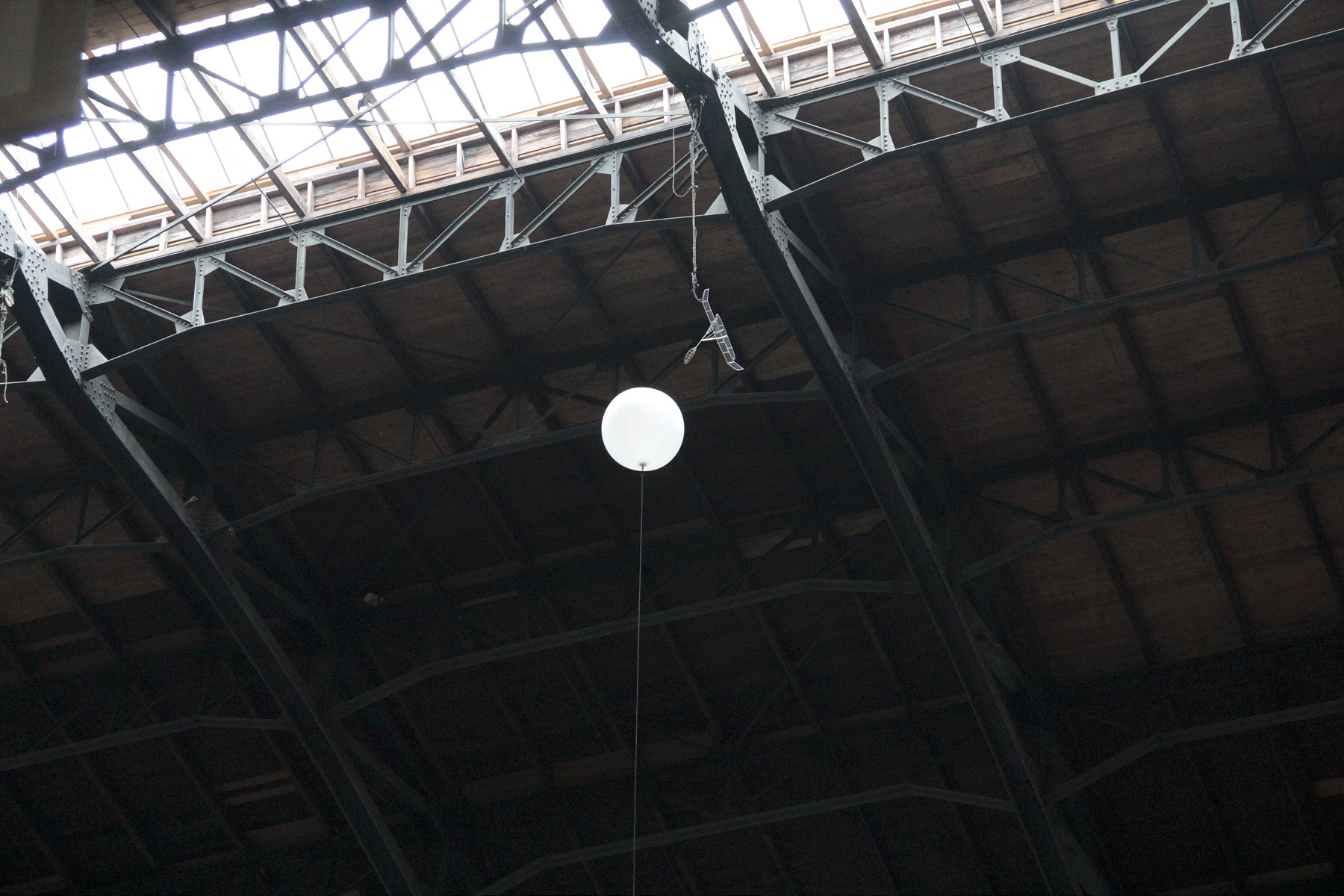


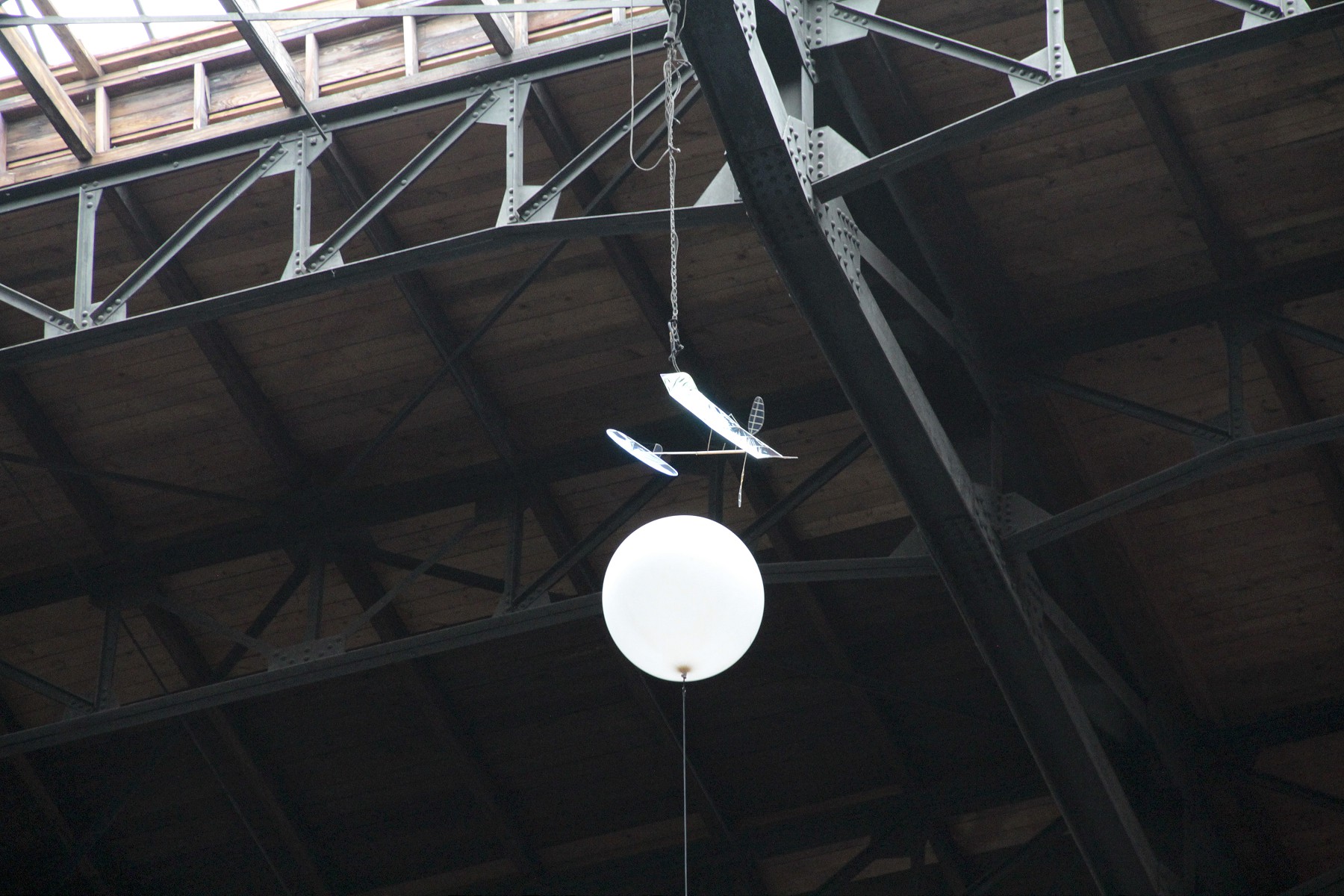


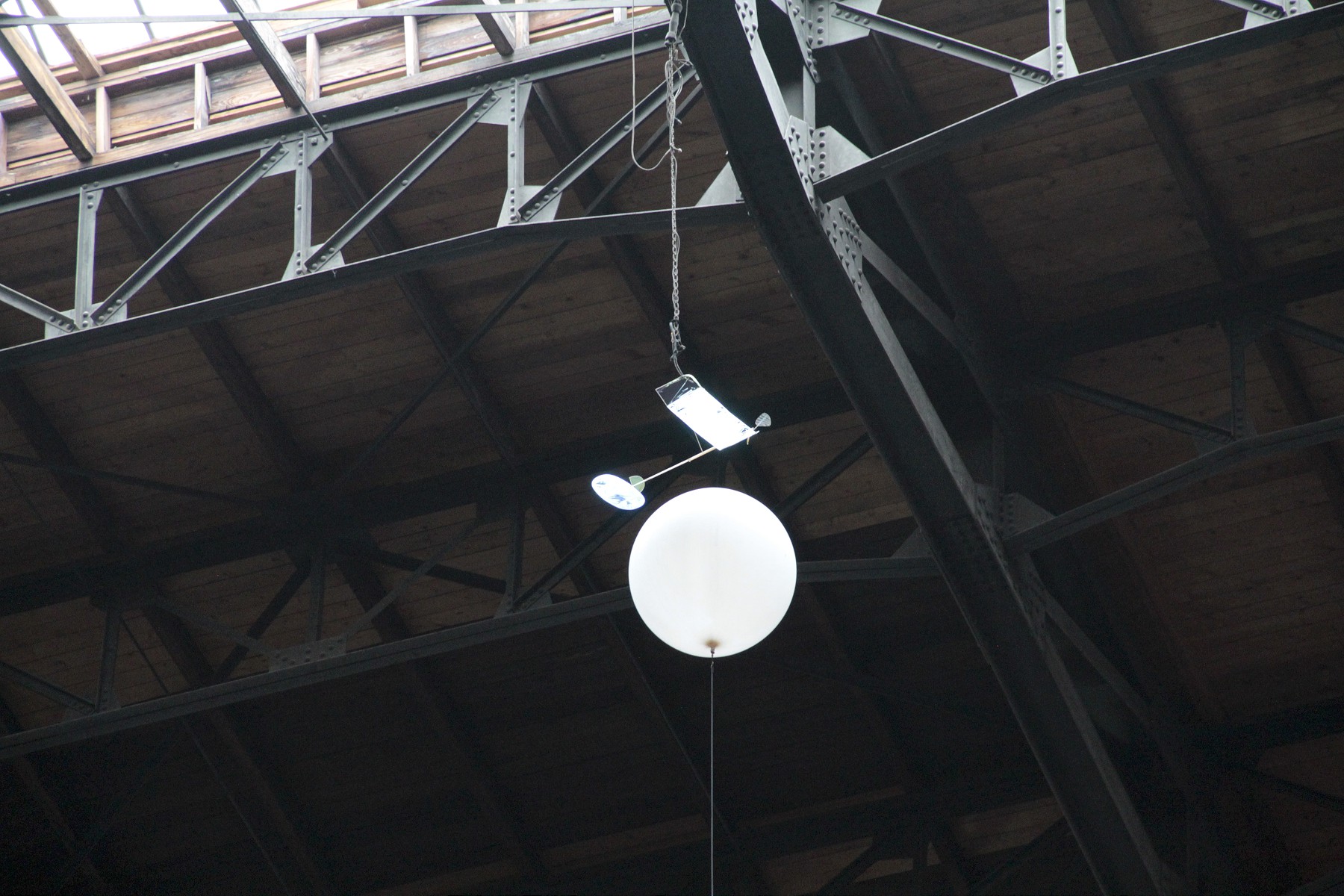

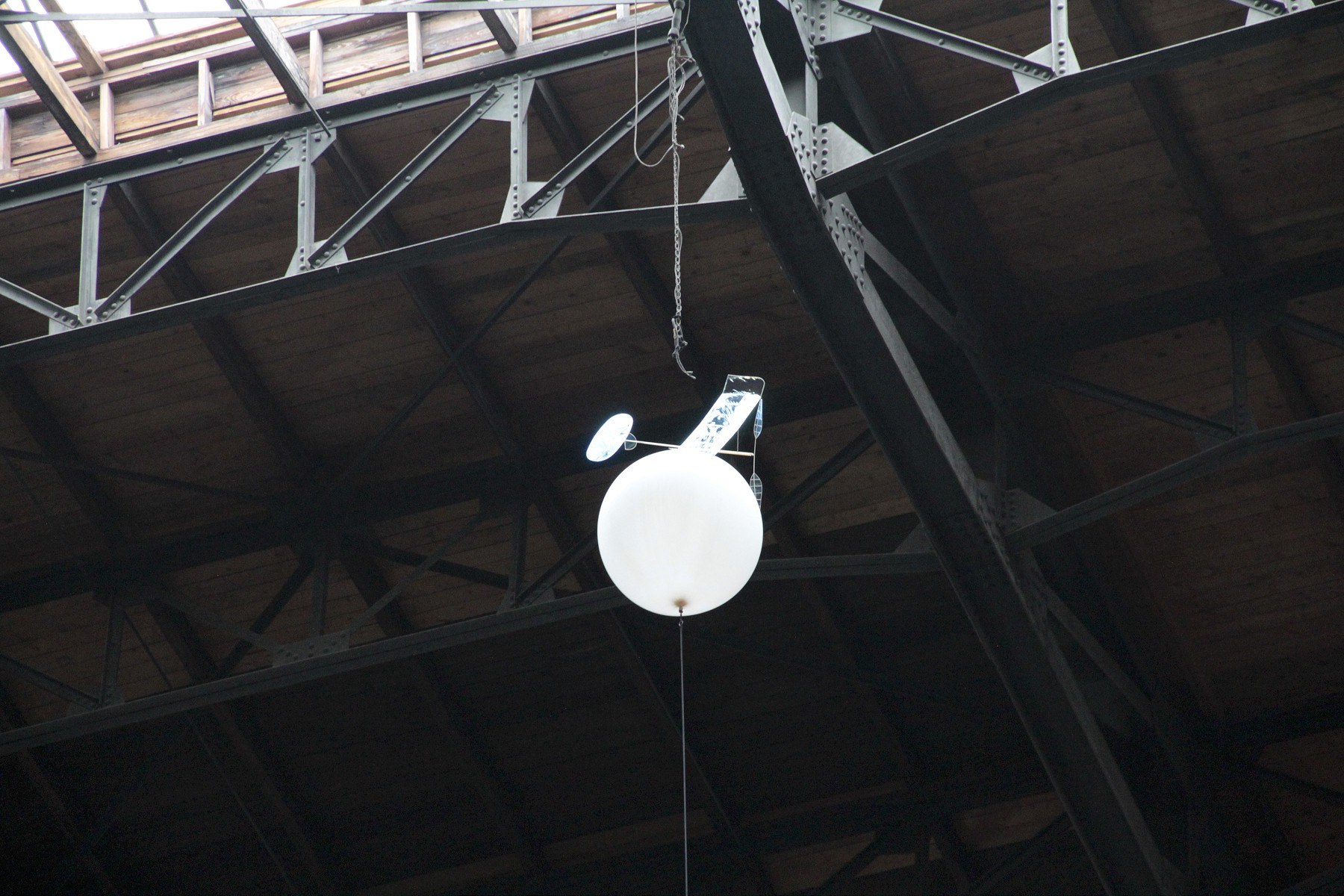
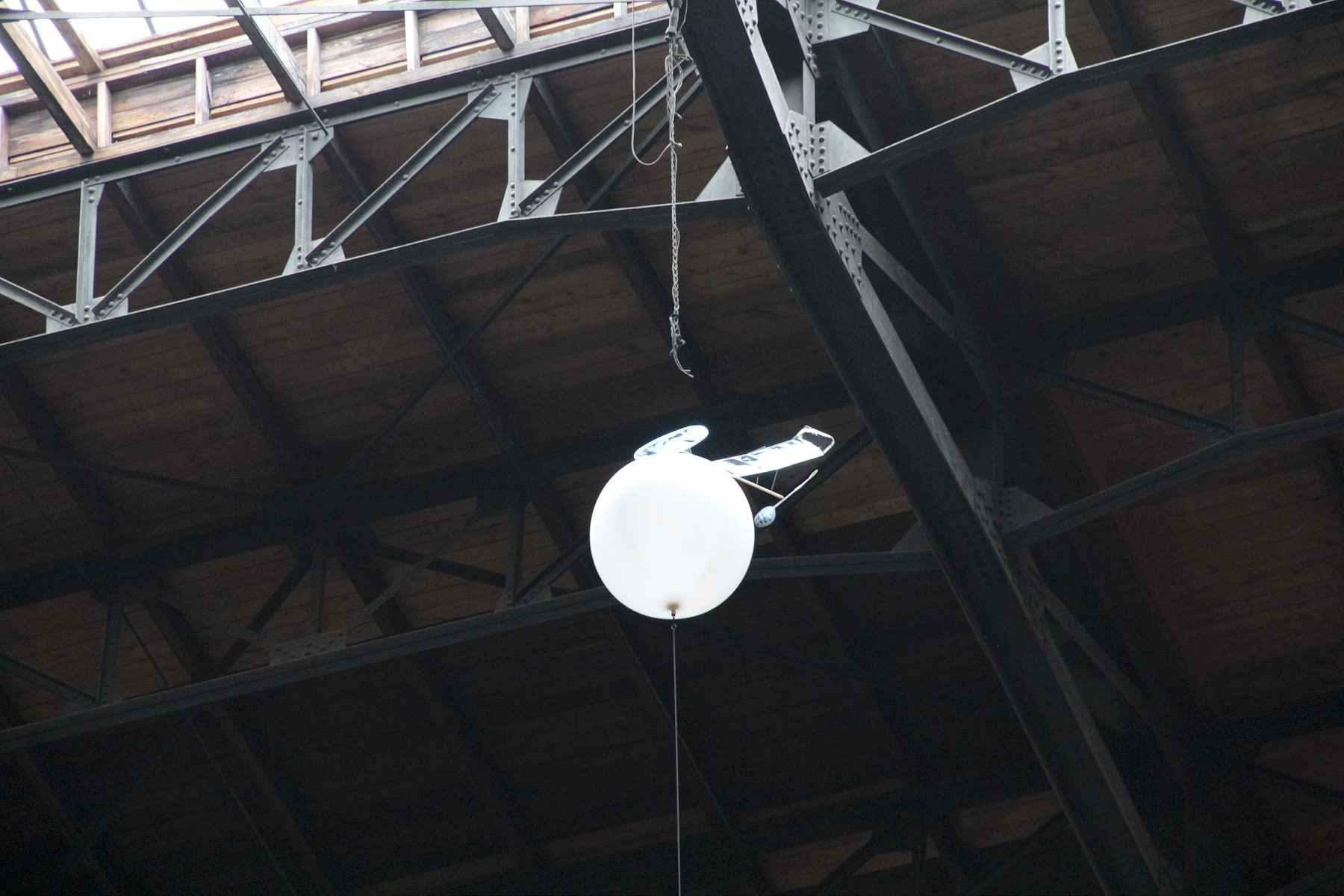

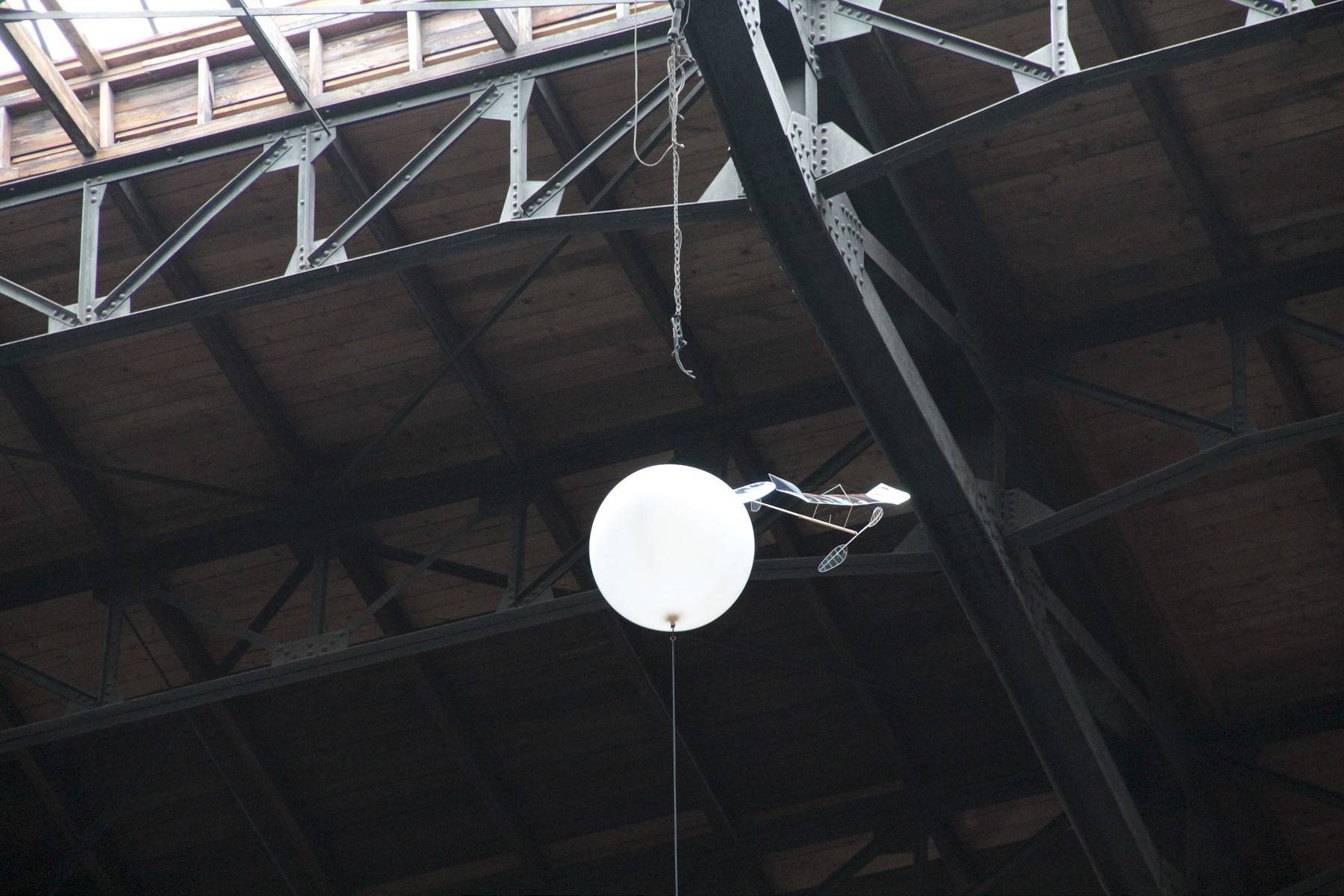


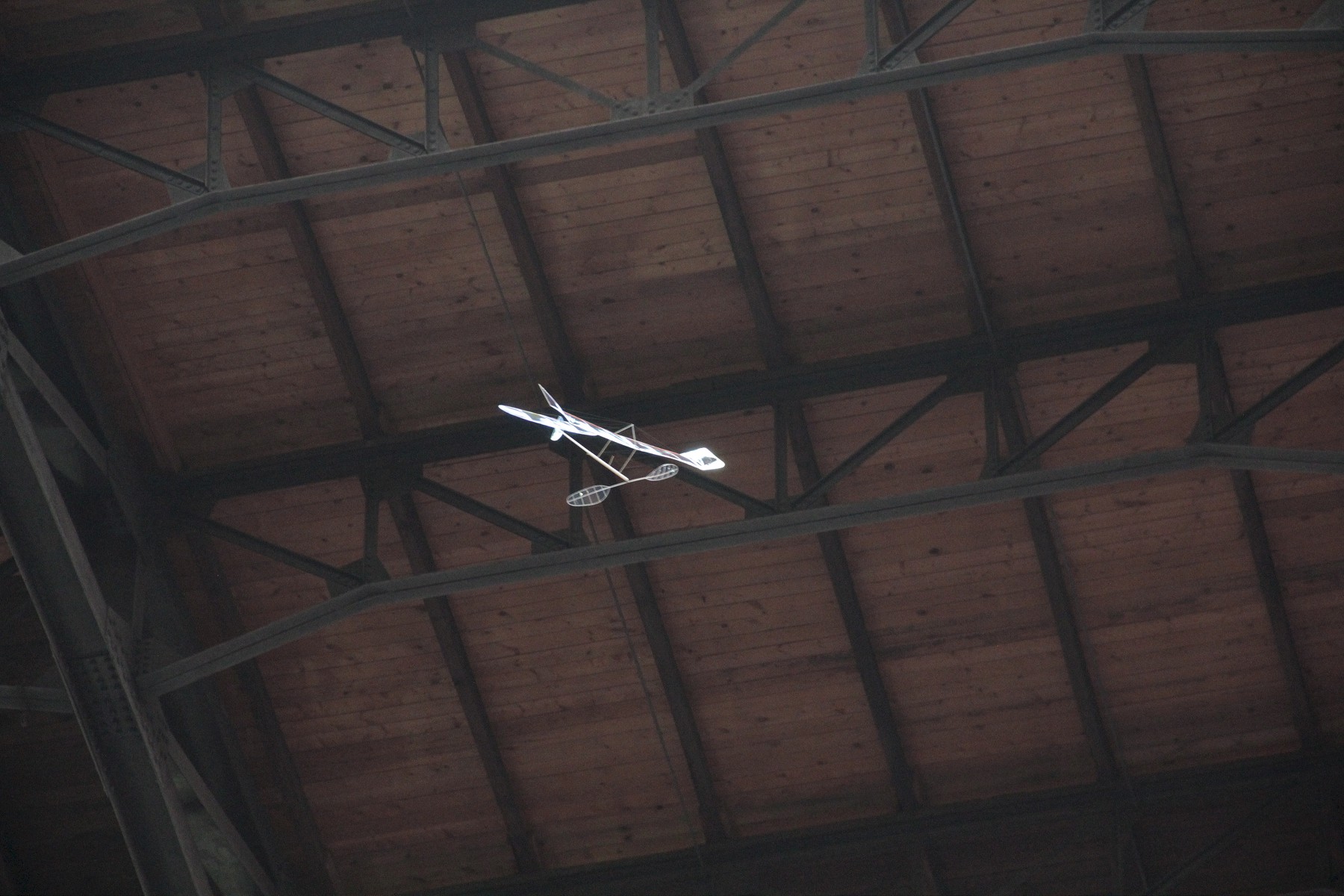

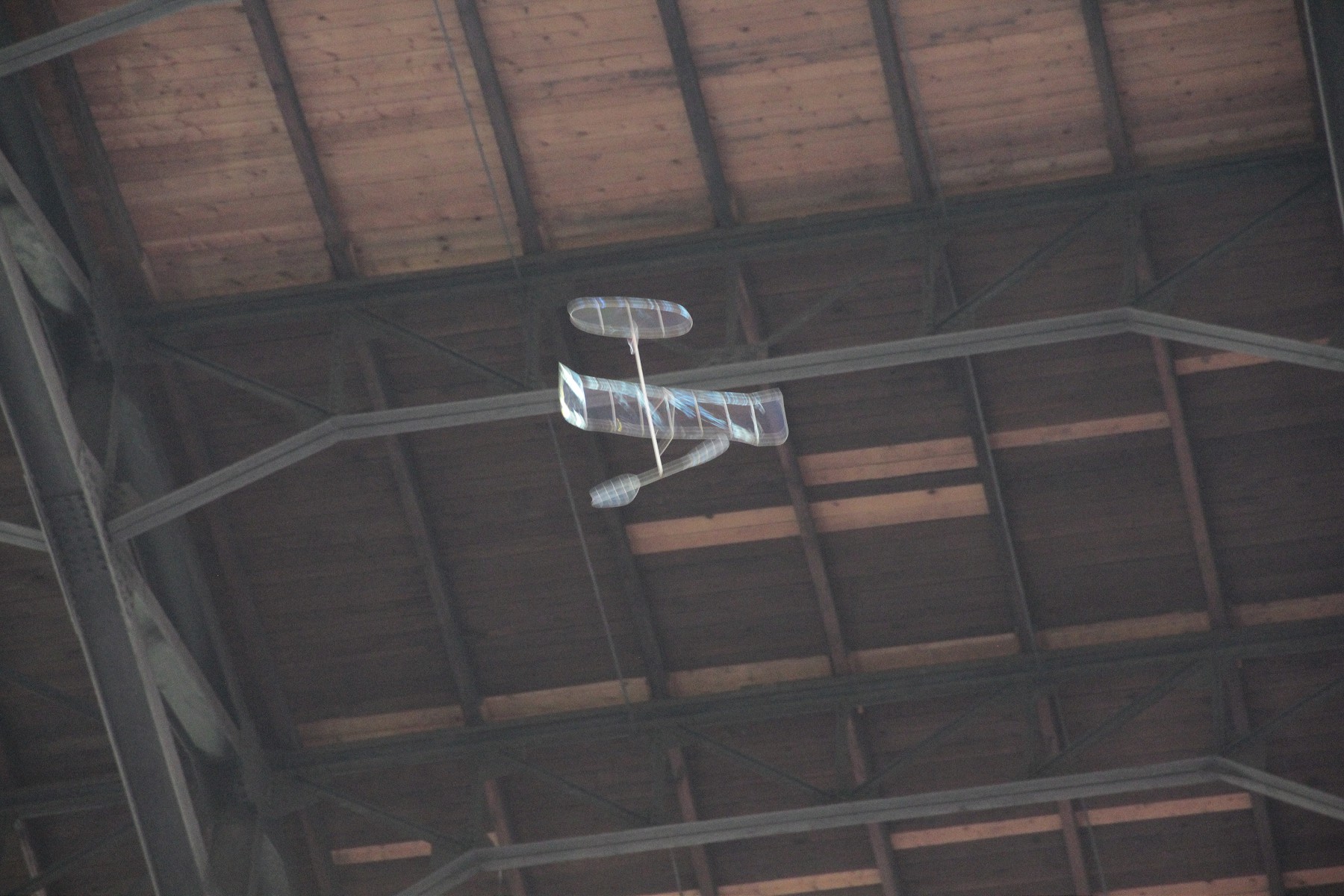


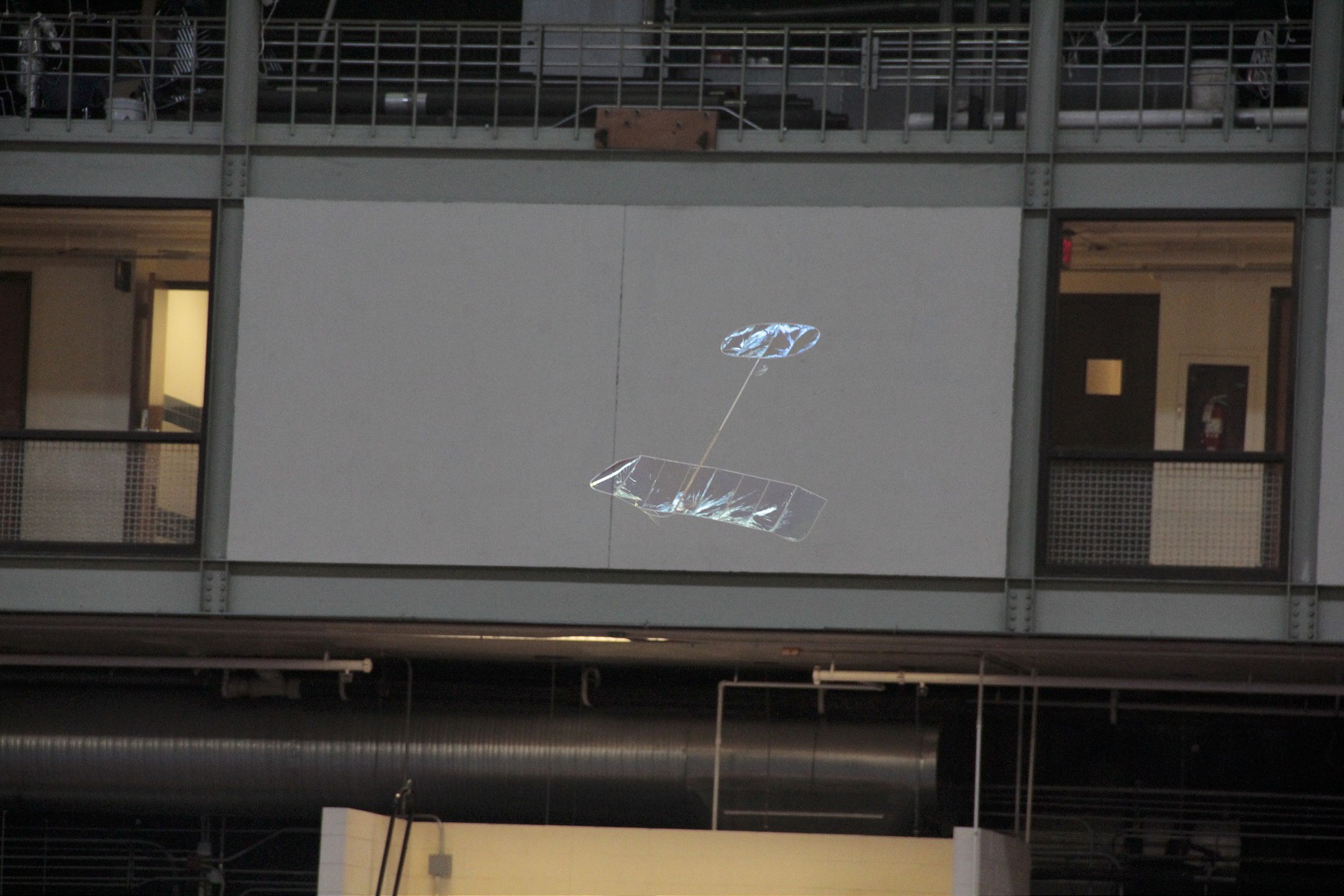
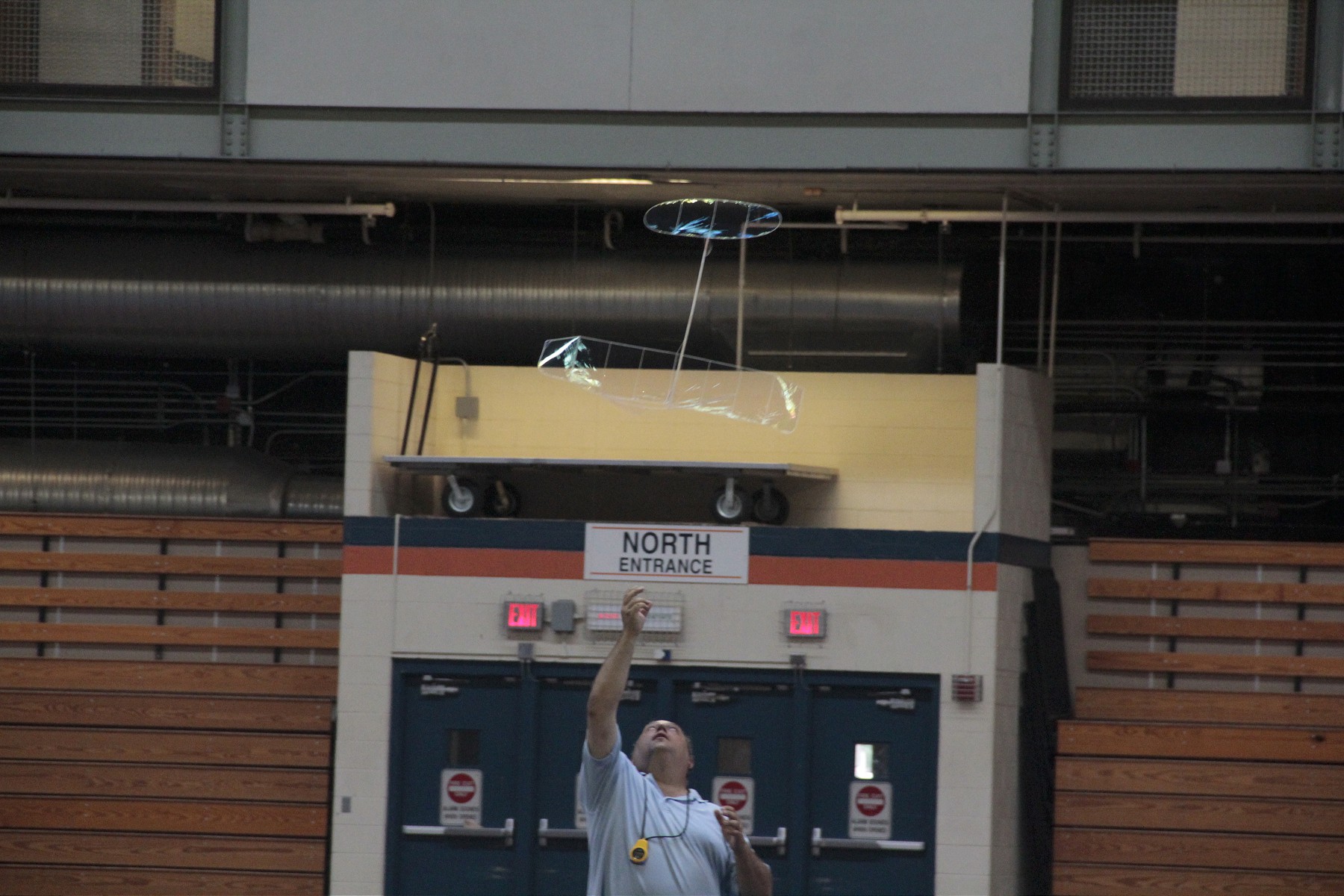
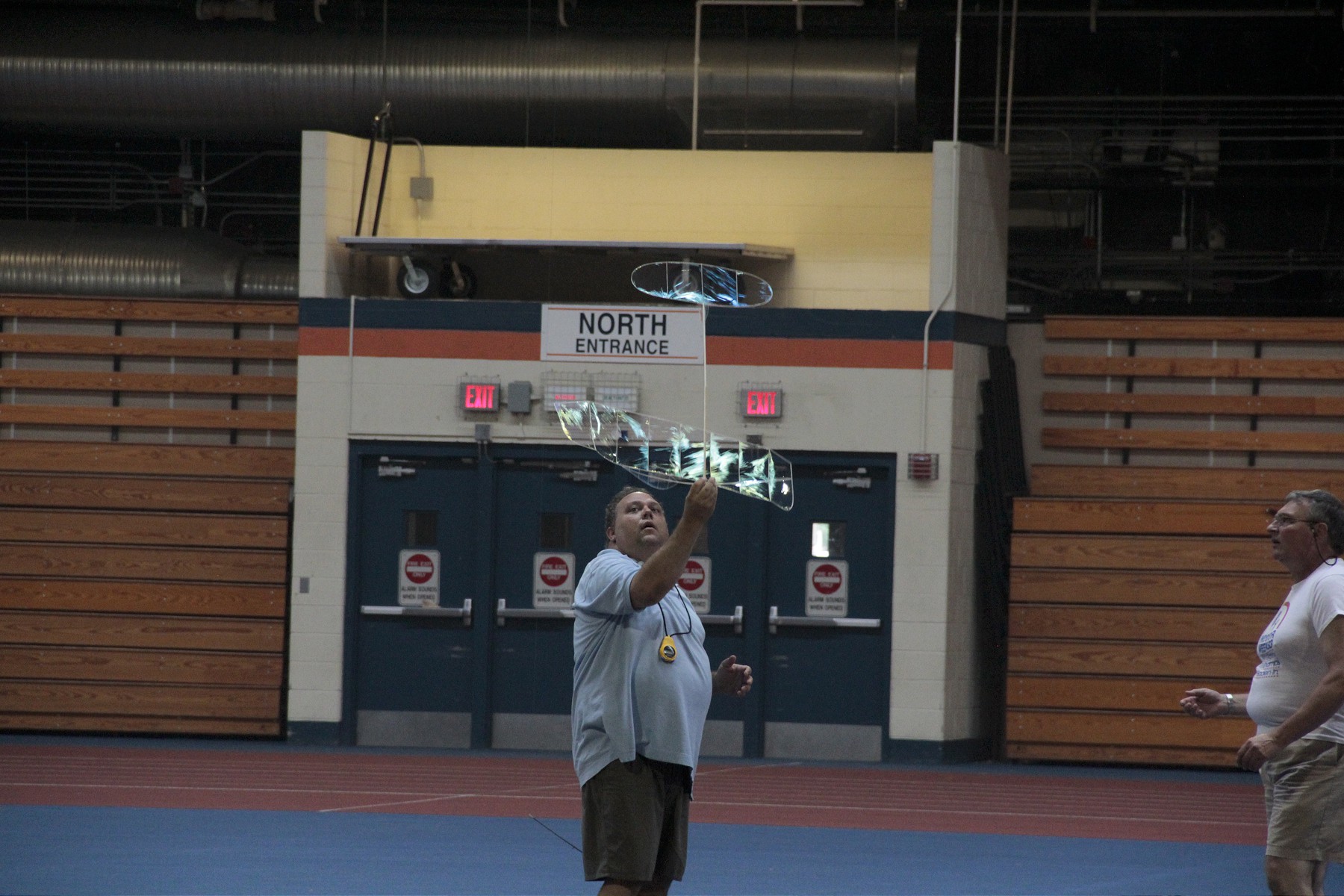
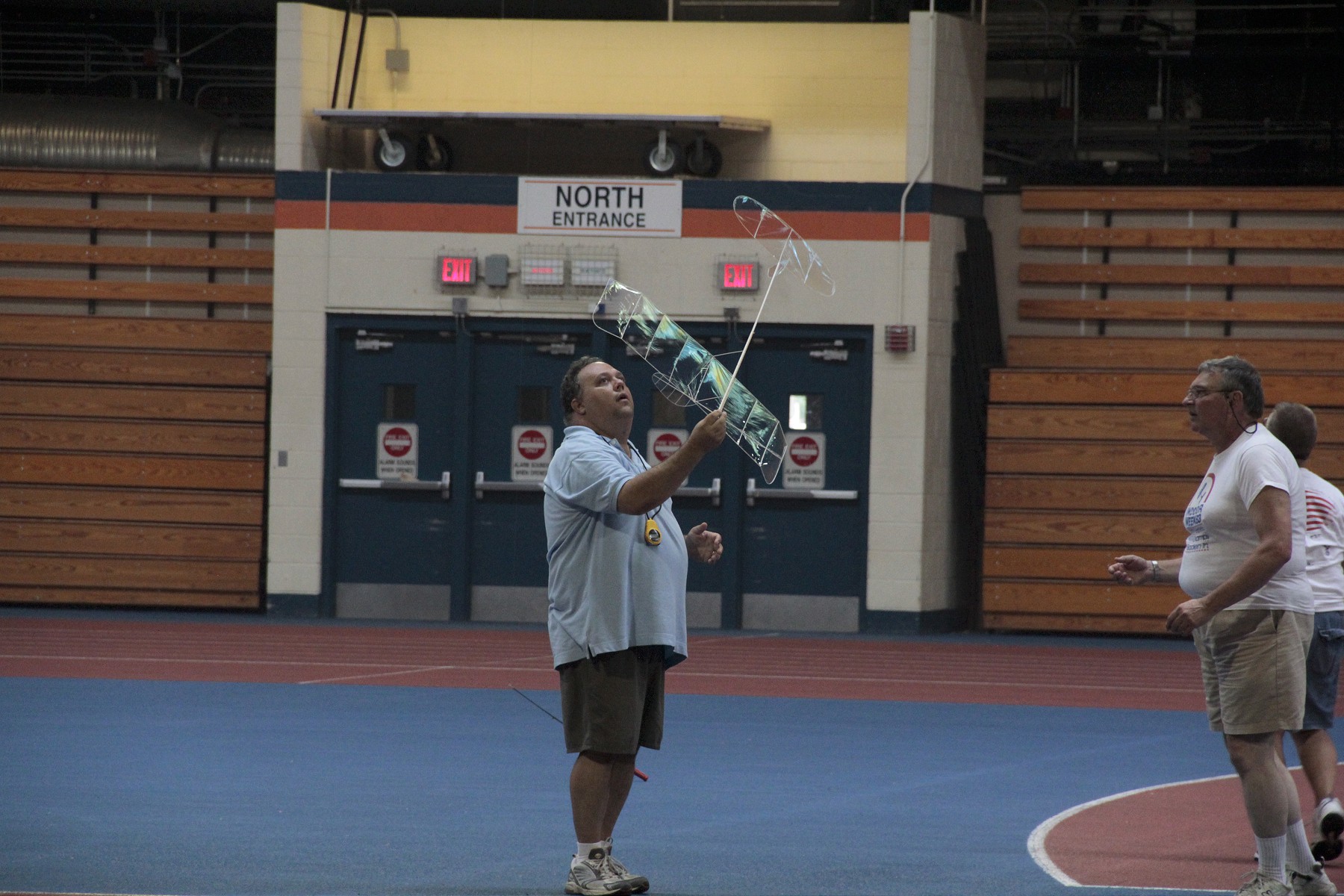
The second sequence we heard a loud SNAP and looked up. The motor on the HLS had snapped and was flailing away. I ran over to grab the camera and started snapping just after part of the fuse/stub/tailboom failed. The model crumbled and came down in a ball.
Within an hour, Don had it glued back together. He had applied a patch of microfilm and the last step was trimming it with the cautery tool. Suddenly it went POOF as the microfilm caught fire. Unfortunately no photos of this exist – but I am imagining him as Wiley E. Coyote. I hope the model is repairable and we can see it next year again.




Kibbie Dome 2013 Results
Thanks to Andrew Tagliafico for running another great contest!

Kibbie Dome Results
Click here to download a PDF of the results.
Photos
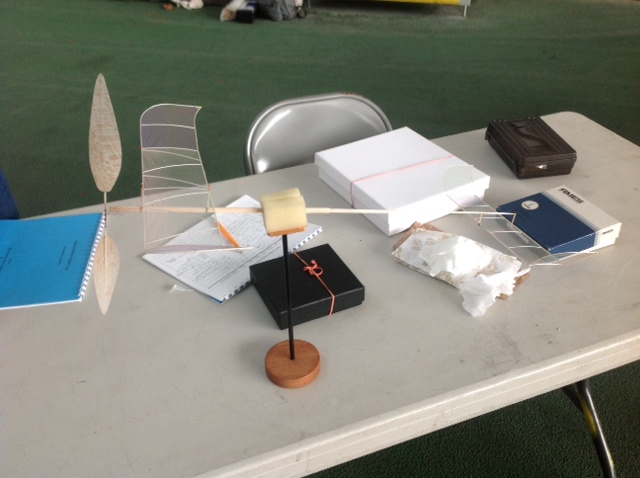
Leo Pilachowsk’s innovative F1L
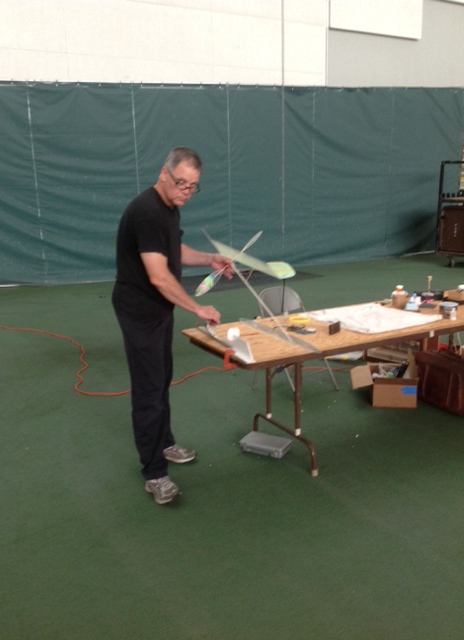
Mark Bennett hooking up.
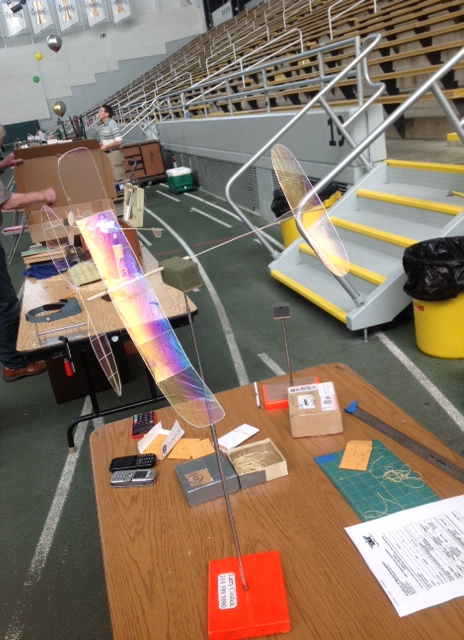
Larry Coslick’s A-ROG.
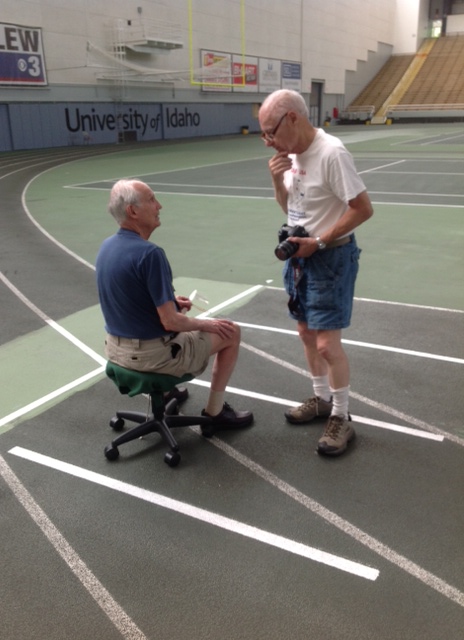
Lew Young and Emil Schutzel
Akihiro Danjo’s Ministick
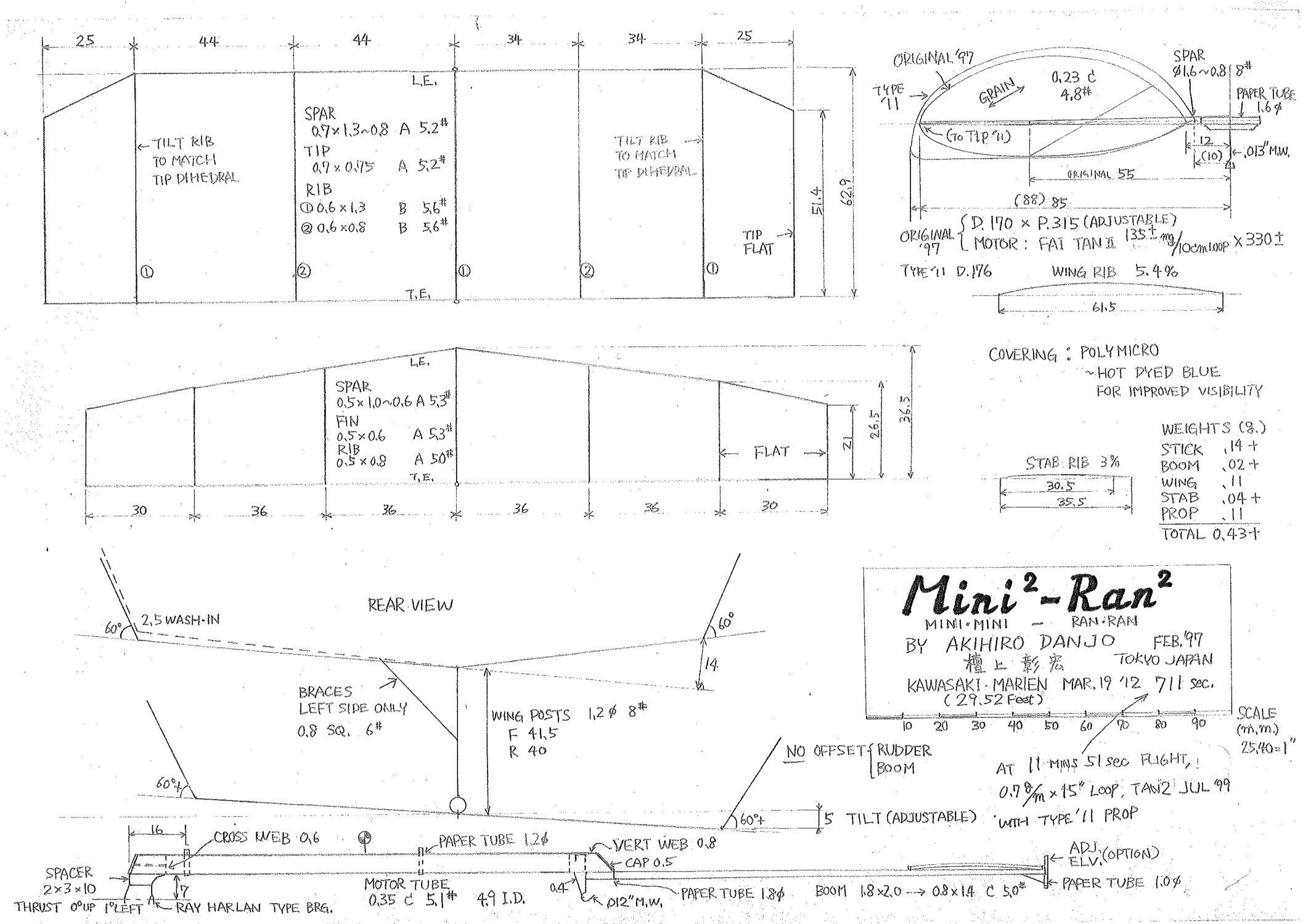 Click here to download a PDF Akihio Danjo’s plan.
Carbon Prop Outline Follow-Up
June 13, 2013
Brett Sanborn
Since publishing the carbon prop outline article, a few people have been contacting me to point out problems and concerns.
Apparently, since the article was written and published, http://www.r-g.de no longer offers Toray M60J carbon fiber. Unfortunately, there is no supplier here in the US for the fiber. Kevin Lamers pointed out that spools are available on another German composites website http://www.litronics2000.de/, though shipping to the US may be a problem.
The ProSet 145-224 epoxy system I suggested does not seem to be available from the CST composites store. I originally used a different Pro-Set epoxy that as of January 1, 2013 is no longer available (old formula 145-226). MGS epoxy has good properties, but also may be cost prohibitive. EZ-Lam 60, available from acp-composites seems to have good properties and can be cured at similar temperatures as the 145-224 of ~140º F.
Finally, there has been concern over the size of the M60J fibers being similar to asbestos fibers which can cause lung problems. In general, the body can clear away larger particulates, but smaller particulates might not be cleared as easy. While the diameter of the M60J fibers (5 µm) is much larger compared to asbestos (~0.5 µm or less), some studies have shown that fibers in this diameter range could cause similar affects as asbestos by becoming permanently lodged in the lungs. While the overall aspect ratio of the fibers also plays a role, it is rare to find asbestos fibers thicker than 1 µm in the lungs [1]. It has also been shown that fibers longer than 8 µm and of diameter smaller than 1.5 µm are the most potent cause of malignant cancers in the human respiratory system [2]. The smaller the fiber diameter, the greater number of fibers per mass unit of asbestos dust (or any small particle dusts), which increases the chance of their inhalation and penetration into deeper parts of the lungs [2]. Furthermore, studies suggest that fibers of diameter greater than 3 µm cannot penetrate air sacs in the lungs (are not respirable) [2]. Hence, it seems that M60J fibers are probably slightly larger than what can be dangerous. We also do not know what affect of coating the fibers first in epoxy followed by sanding will do to the size of the particles. This may indeed increase the size and thus reduce the likelihood that the fibers become permanently stuck in the lungs.
All this is to say that when dealing with the M60J fiber it is probably not a bad idea to wear a P100 particulate filter respirator, which will stop small particulates. A further step would be to construct a small particulate hood as shown in the figure below. The hood below is a Lexan box with holes on either end to which a small HEPA air filter is attached. When sanding, the filter is turned on while sanding takes place inside the box.
For an in-depth review of Sources of Asbestos and Other Mineral Fibers Present in Ambient Air, see [2].
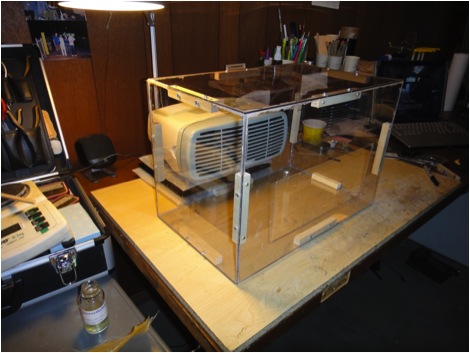
Filter setup – Polycarbonate box with hole cut in back for HEPA filter and working hole in front to provide negative pressure and airflow into the box
[1] D. Liddell, K. Miller. Mineral Fibers and Health. 1991. CRC Press.
[2] L. Wachowski, L. Domka. Sources of Asbestos and Other Mineral Fibers Present in Ambient Air. Polish Journal of Environmental Studies Vol. 9, No. 6 (2000), 443-454
Tyson Glue Bottle Mods
Steve Fujikawa
steve_fujikawa (at) verizon.net

Applying clear silicone around the top of the bottle slows evaporation.
Dennis Tyson’s glue bottles are great, but if you’re like me you’ve had a couple of problems with them. First, the acetone evaporates from the bottle before you’ve used it all, necessitating an annoying clean out job. Second, the supplied polyethylene nozzle develops leaks from the acetone. I’ve found a solution to both of these.
First, apply clear silicone sealer around the cap, aluminum tube, nozzle, and especially the wire and it’s hole as shown in the photo. This slows evaporation to virtually zero. Apply the silicone with everything fully assembled and let harden thoroughly. The wire can be carefully pulled free while leaving a tight seal around it and the hole. Since doing this I’ve never had the glue harden in the bottle or the nozzle, even after several weeks. You can even pull the cap off to add more glue without replacing the silicone.
The nozzle can be replaced with the Sig CA applicator tip shown below. You will need to cut both ends to get a tight fit around the wire and the aluminum tube. Do this a little at a time so you don’t waste more than one tip like I did! The Sig nozzle seems impervious to acetone and never develops a leak.
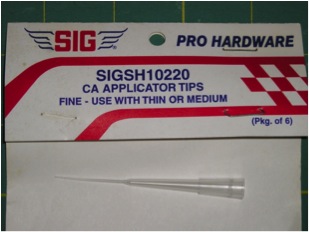
Replace the polyethylene nozzle with Sig CA applicator tip.
Another more minor issue that I’ve noticed is that the wire corrodes from either the glue or the acetone. After a while the oxide can contaminate the glue. I’m not a chemist so I’m not sure why this happens, maybe the glue is hygroscopic? But I suspect the problem could be solved by using stainless wire. I need to order some soon to make pushrods for a DLG so I’ll try it out.
Lakehurst Memorial Day Flying Report
Brett Sanborn
May 28, 2013
Normally this time of year, everyone would be gathered at USIC in Johnson City, Tn. However, since new banners and things will be hung from the girders, the indoor community was unable to return to Johnson City for the NATS. The indoor NATS will be held in Champaign, IL from August 7-10th in the 98 ft tall (Cat III) armory. USIC at Johnson City would have provided a good practice session for the upcoming USA F1D team selection contest being held at the Kibbie Dome in late June, but due to the unavailability of the mini dome, Lakehurst was the only option for John Kagan, Kang Lee, and myself. Had we been in Johnson City last week, we would have enjoyed temperatures in the low to mid 80’s and lunchtime cuisines ranging from Thai food to Pal’s Hotdogs. This was not the case for the final high-ceiling practice session at Lakehurst last weekend, given the variable weather conditions, Wawa sandwiches, and chips and salsa.
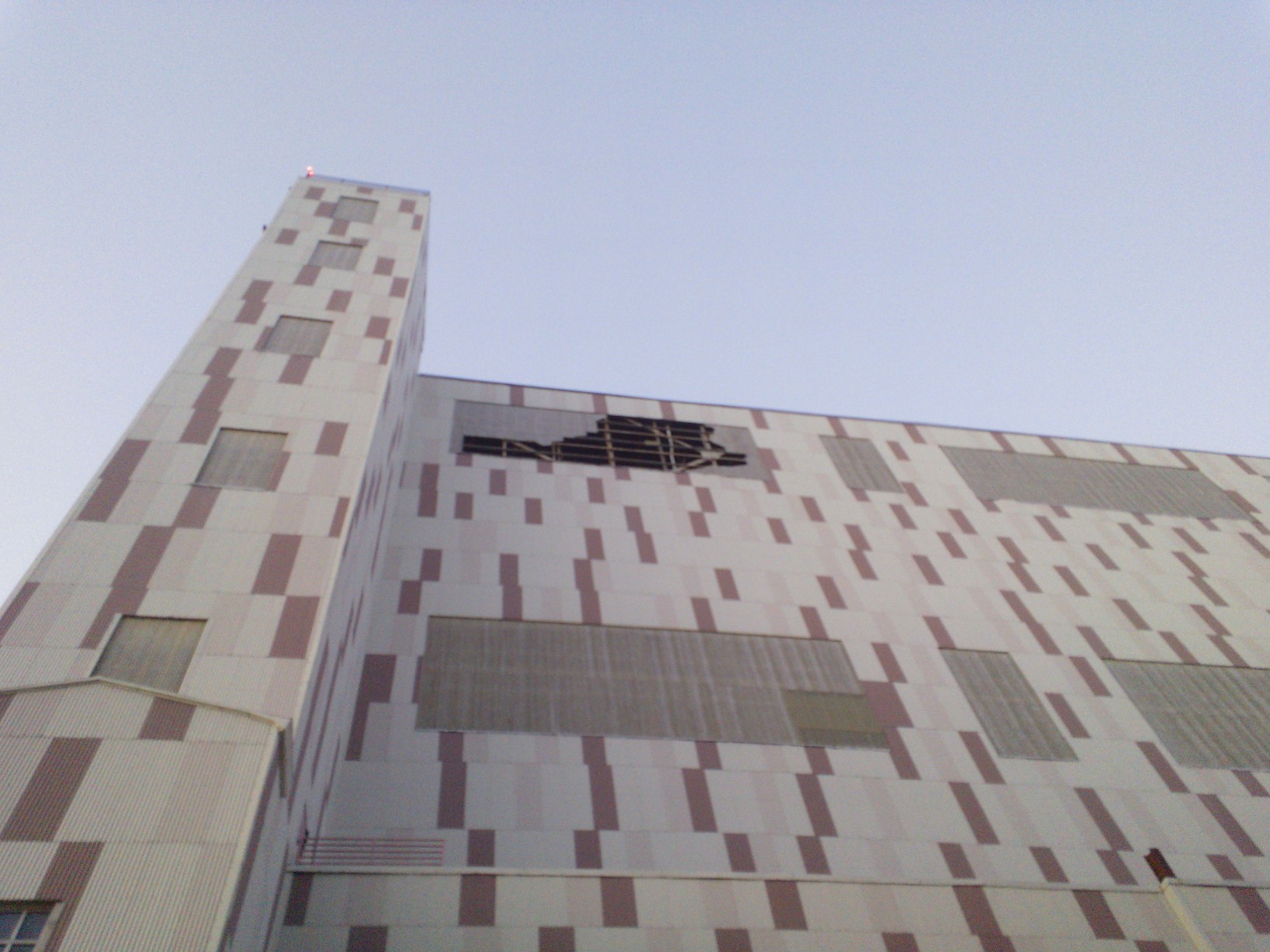
Saturday was cold and windy. The temperatures inside the hangar were in the upper 50’s with winds outside in the 20-25 mph range. Luckily I brought two coats and my green ski cap to keep warm throughout the day. Max Zaluska joined us in the afternoon only to hang out, not wanting to risk his recently repaired handlaunch stick in the windy conditions. The hangar was apparently damaged as a result of hurricane Sandy. Fiberglass panels that serve as windows for the hangar were blown off leaving a gaping a hole 40 by 15 feet in size located at the end of the hangar above the club locker (see photo). Though the base reported damage to hangars 5 and 6 after the hurricane, there was no photos of the window damage in any of the 1,589 photos of the damage and recovery effort on the McGuire-Dix-Lakehurst official photo stream. The East Coast Indoor Modelers (ECIM) president Horace Hagen said that folks at the base do not currently have the money to repair the damage. ECIM might put forth a portion of their yearly donation to the Joint Base toward repair of the damage though the total expense is still unknown. We will update the indoor community as information becomes available.
Not wanting to get F1Ds out due to the high winds, John Kagan rummaged through some buckets located in the club locker and found two recovered ministicks and a limited pennyplane that had “Underdog #1” written on the motorstick. After some quick repairs, I was able to squeeze an 8:23 out of the ministick. Kagan had an even more exciting flight with the Underdog. After Kagan launched the Underdog at the middle of the hangar, the model climbed to about 150 feet and then drifted the entire length of the building toward the end with the hole. Now circling at about 170 feet, the plane began to rapidly sink. In about 20 seconds, the model descended to about 80-90 feet above the floor. After circling there for another 20 seconds, the model ascended back to the ceiling over the course of about 30 seconds. After the second ascent, the elevator ride was over for the Underdog. The Underdog cruised in for a cool 13:56 flight time—quite exceptional for a beat-up plane that had possibly the wildest ride of any indoor model in the history of Lakehurst.
Sunday proved to be a bit better though the winds were still in the 20 mph range. Kang was able to fly his primary F1D for a two-part flight of about 33 minutes (he restarted the stopwatch after retrieving his F1D from a hang-up). Kagan was doing consistent 9:00 quarter motors with various F1Ds and I did an 18:54 half motor before packing up for the day at around 8:00 pm.
The lower winds and higher temperatures on Monday afforded more flying time. We flew quarter and half motors for most of the day until the air got squirrelly around 7 pm. In one instance, Kang and I both launched at about the same time and both drifted half the length of the building (away from the hole) and spend the entire flight steering back to the carrier deck; Kagan later followed in suit. All in all it was a useful weekend for preparing for the upcoming team selection contest. Kang, Kagan, and I tried to wring out models to get them to climb and fly consistently; trimming propellers out for the Kibbie Dome at Lakehurst would prove to be a fruitless pursuit—any adjustments made at Lakehurst would have to be readjusted at Kibbie.
We do not yet know how the hole near the roof will affect flying in the hangar. We saw higher winds on Sunday, yet the conditions inside the building were a little better than lower wind conditions on Monday. Ultimately it will probably depend on the wind direction and intensity. Hopefully the hole in the building will get fixed by the Joint Base soon.
View more by category: Uncategorized (306). .