Archive for 2014

Statuses

Ivan Treger’s 2014 World Championship 3rd Place F1D

In Uncategorized on November 27, 2014 by nicholasandrewray

Ivan Treger’s 2014 World Championship 3rd Place F1D

Ivan Treger F1D 2014 World Championships copy

Click here to download a copy of Ivan’s plan.

INAV Thanks Bernhard Schwendemann of  Willkommen bei der Thermiksense and www.volnylet-freeflight.cz for allowing us to republish this plan. INAV also wishes to thank Steve Brown for his work on obtaining a copy of the plan.

Statuses

CAP – Flying

In Uncategorized on November 20, 2014 by nicholasandrewray

CAP – Flying
Uwe Bundesen won the first CAP-contest in Europe. The contest was held within the German Champs for Indoor Models in 2014. There were seven competitors. The best flight times were over 5 minutes. Cap – flying is becoming popular because it overcomes some awkward properties of model impulse. Supercapacitors are cheap and readily available from several sources.
INAV  thanks Dr. Heinrich Eder for reporting on the contest.
CAP-14Click here to download a PDF of Uwe’s plan.

DSC_0049z

Uwe Bundesen with his 1st place model.

DSC_0054

Uwe’s model near the ceiling

Statuses

Guidelines for Spectators

In Uncategorized on October 9, 2014 by propblocks

My first time at West Baden two years ago, I lost an F1D to a spectator who grabbed it out of the air after a prop tuck.

Flying there was wonderful – lots of questions, lots of interest from the dozens of spectators. At the time I thought we should really have something posted that explained what we were doing. Even better, if we had posted information at all of the entrances and included a table set up with different model classes. We could have used the time for education and potential new flyer recruitment. Informed spectators may not destroy more models.

Earlier this year I found myself again at West Baden. And realized that even though I had talked about this to several other flyers, none of us done anything to make it happen. Nick pushed me a bit, I wrote something up and got some feedback. It sat again for several months until Nick pushed me again. I approached a co-worker who really is a great wordsmith and asked her for help. The promise of homemade cookies probably helped. So with special thanks to Elizabeth Harmon Miller for her edits, and to Nick for keeping at me, this is what I came up with. Feel free to edit, personalize and use at any indoor flying event.

Guidelines_for_spectators

Welcome to the wonderful world of Indoor free-flight model airplanes.
We are hosting a competition here today. To the ____________ you can see some example models of various classes.
The Academy of Model Aeronautics has created classifications based on ceiling heights. This building is a Category ____ site, with a ceiling height of ________ feet. (Add comment: The West Baden Springs Hotel atrium is considered to be one of the premier Cat3 sites in the world.)
We love to talk about our models, and of course you can take pictures.
Maybe you’re wondering …
What are the model planes made of?
The models are built with balsa wood, and most are covered in a thin Mylar film. Some use bracing wire made out of tungsten that is 1/3rd the size of a human hair. Some use composites like carbon or boron fiber.
How are the models powered and controlled?
All of them are powered by rubber bands and, once we launch them, we can’t control them. We are allowed to steer, however, and you might see folks use balloons or long fishing poles to do this. We also use them to retrieve models that occasionally get stuck. Please excuse us if we suddenly walk away from a conversation to steer; things can change rather quickly.
Why do the props turn so slow?
Because the models are very light, the propellers are very large, and there isn’t that much turning force in a tiny band of rubber.
Where can you buy these models?
You can’t buy them, so we have to design and build them ourselves. Some models can take up to 60 hours to build and fly at walking speed. If you see us shuffling along with a large model, it is because walking too quickly can destroy it. That’s how fragile they are.
How do you win the competition?
The model that stays in flight for the longest time wins. {enter details about most impressive current records}
Guidelines for spectators:
• Look but please do not touch.
• Walk slowly and look around for models.
• It is best to let a model crash. Please do not try to catch or grab a model.
• When you see someone launching a model, give them some room. Some folks are trying to set U.S. or even World Records here today.

If a collision between you and a flying model is unavoidable, please stand still and let it hit you. You will not be hurt, and you’ll have a terrific story to tell about the time you survived a plane crash. Let the model come to rest on the ground and the owner pick it up.

Statuses

Press Release: Ron Williams Building & Flying Indoor Model Airplanes

In Uncategorized on September 25, 2014 by nicholasandrewray

COVER.7.APR27

The Cooper Hewitt Design Museum of the Smithsonian Institution has added my book, Building & Flying Indoor Model Airplanes to their shop online and at the museum. It was selected for the book’s illustrations and design. It will be interesting to see what influence it has on what people know about indoor with a new wider audience. When it was first published it sold out quickly but the publisher, Simon & Schuster, did not follow up. It was so popular in one bookstore that a copy was chained to the cash register to save the shelved copies from wear and tear. Indoor flying enjoyed a surge in the years following and a second edition was published by Peregrine Smith. This latest edition is a facsimile of the earlier editions and more information about it can be seen at <www.indoormodelairplanes.com>. The book is also available from the National Free Flight Society (NFFS) and Sam’s models in England.

~Ron Williams

Statuses

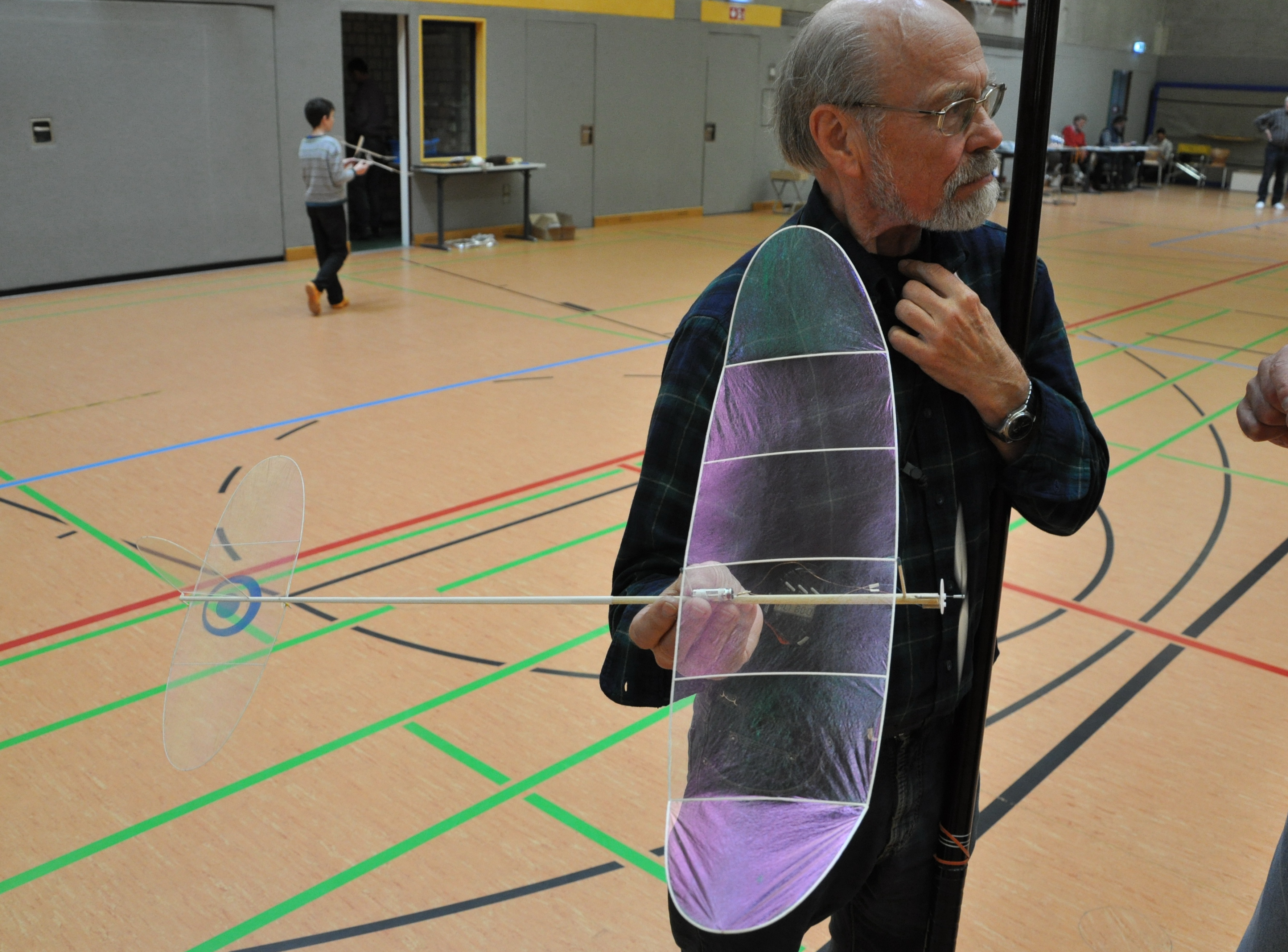
Nick Ray’s Ministick

In Uncategorized on September 24, 2014 by nicholasandrewray

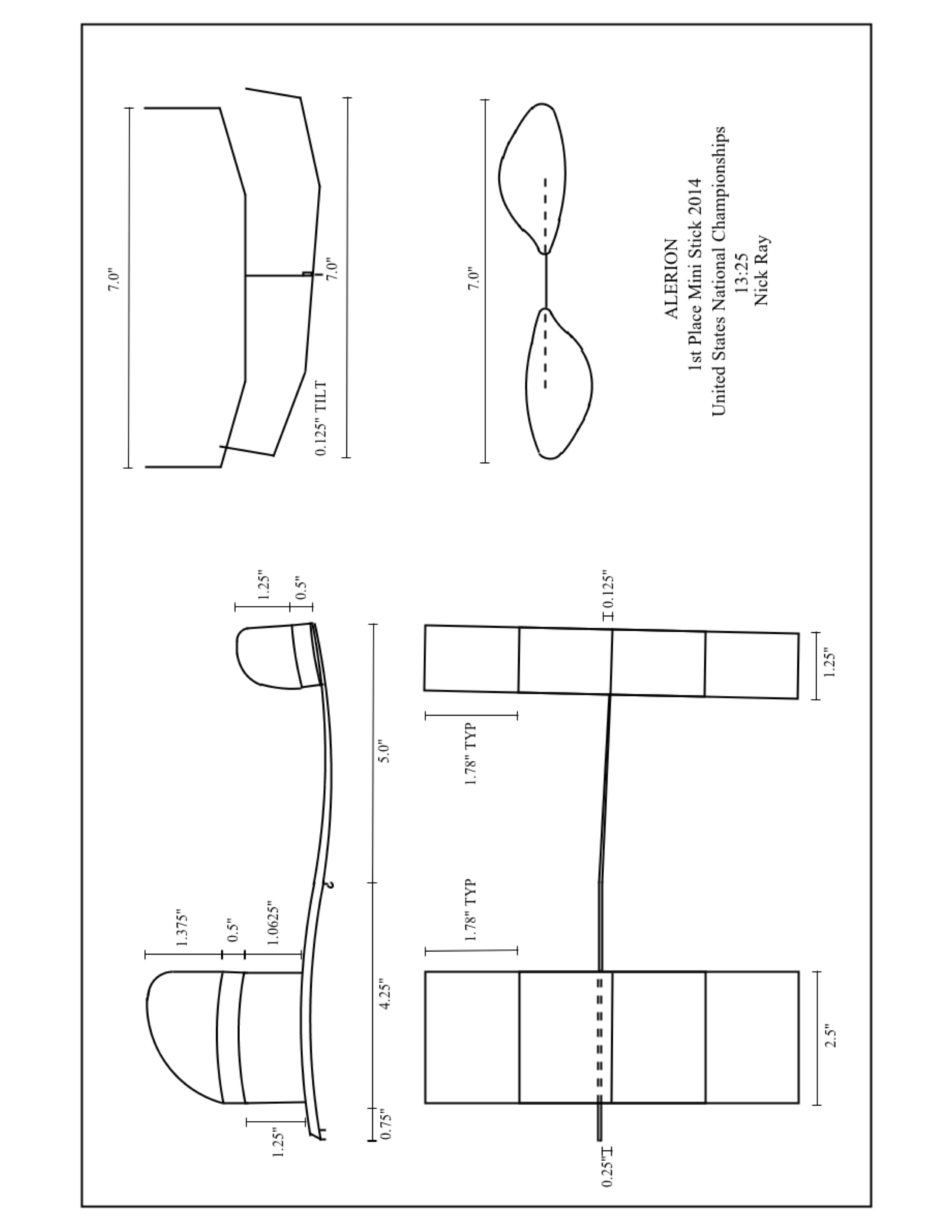
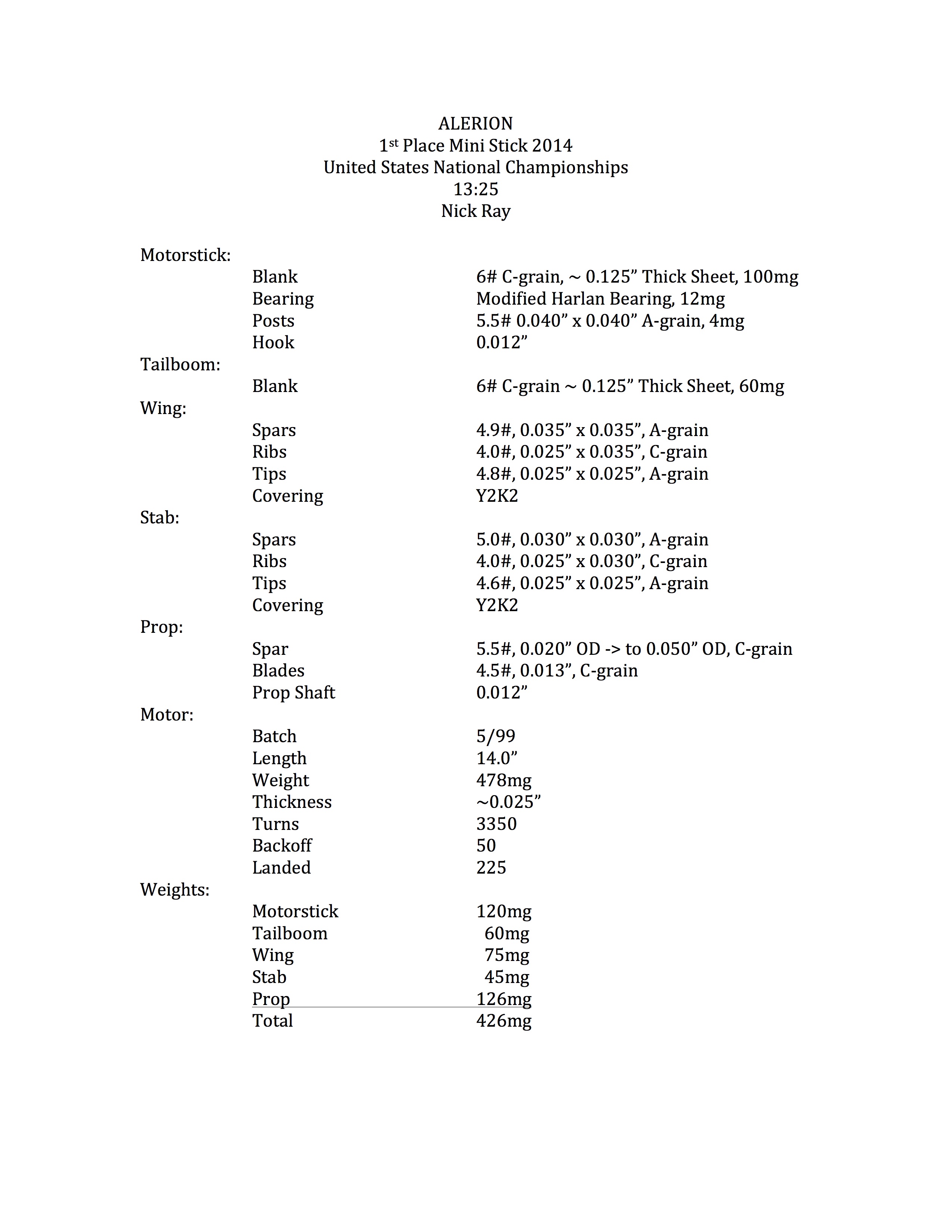
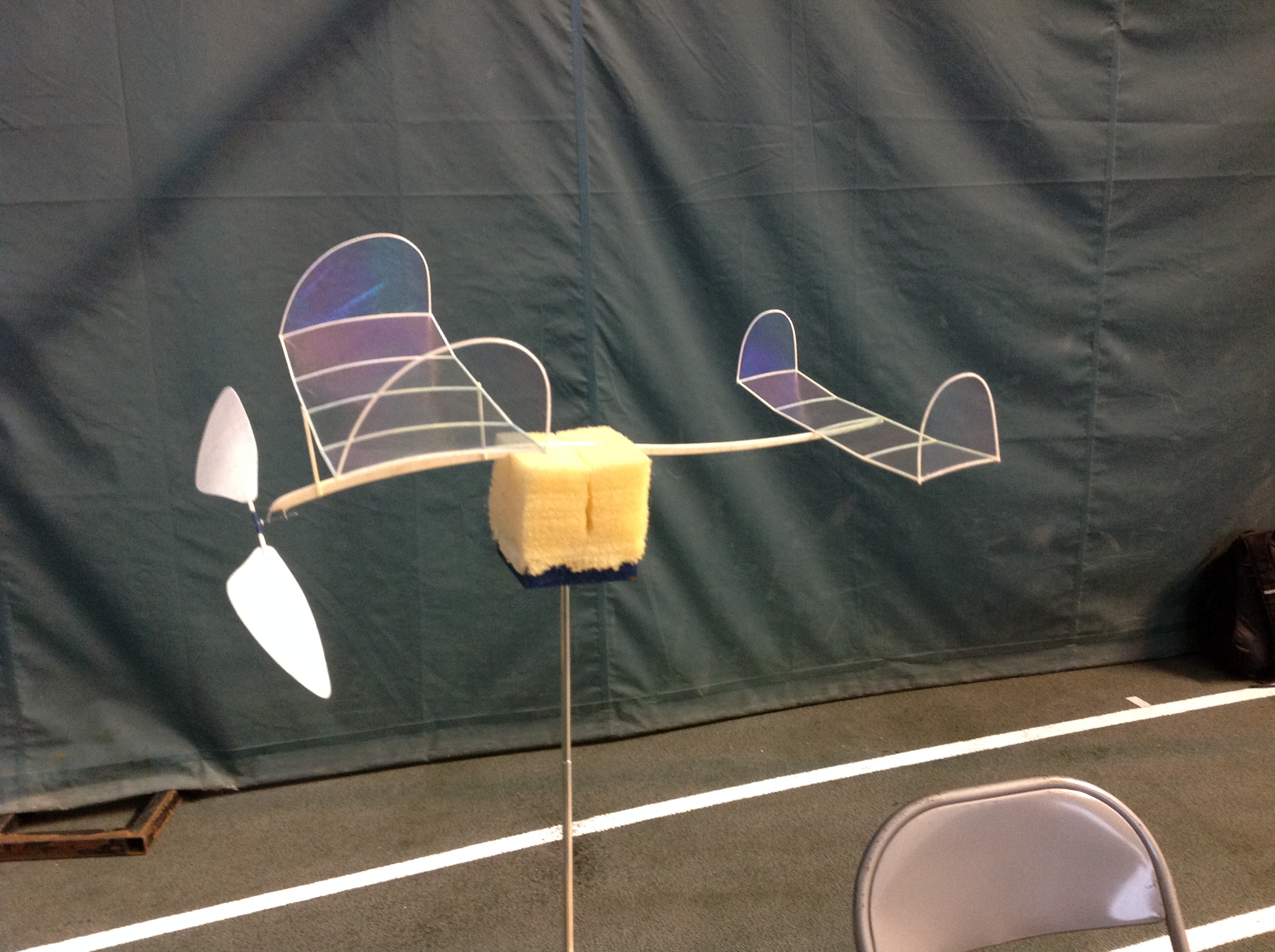
Nick Ray’s Ministick

MinistickALERIONphoto

Click here to download a PDF of the plan.

Statuses

Larry Loucka’s Record Setting F1L

In Uncategorized on August 21, 2014 by nicholasandrewray

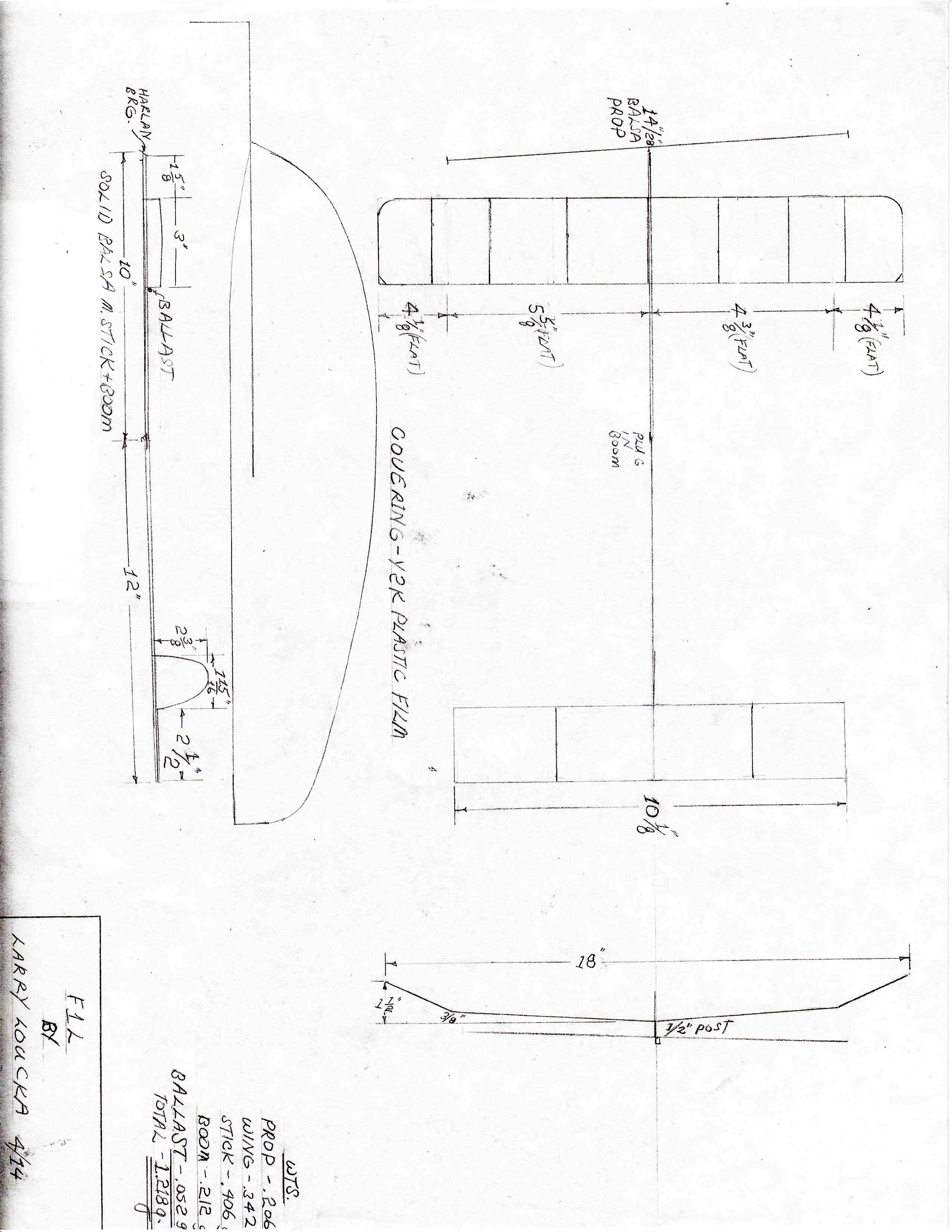
Larry Loucka’s Record Setting F1LLouckaF1L copy

Click here to download a PDF of the plan.

Open F1L Cat III Record West Baden, IN

Rubber Specifications: 16 ½”, 0.062”, 0.045oz, 10/97 Tan II

Winding: Wound to 2275 turns, backed off 110 turns and landed with 80 turns.

Average RPMs: 106

Construction note: Prop blades grain is parallel to the spar.

Flight notes: On the previous flight, the model hung up on the plastic surrounding the saucer, and during retrieval the left hand wing tip was broken and a hole was put in the center section of the wing. The record flight was launched five minutes before the contest was over. There was no time to test fly after repairs. Again, the model played tag with the bottom of the saucer and the plastic on the opposite side from where it had hung up before. It did not touch the girder work. Only one pole steer was required to miss a chair before landing.

19:39 is my personal best in F1L. The design of the model is about the same as a paper-covered EZB my son and I built in the early 1980s. It weighed 0.050oz, but was a good, reliable flyer. My F1L is a little over 0.042oz.

I would recommend that anyone starting out in F1L read the “Serendipity” EZB article by Nolin that was published in the AMA magazine about 20 years ago. It was a very good run down of EZB trim.

~Larry Loucka

Statuses

Brett Sanborn’s 2014 F1D

In Uncategorized on August 5, 2014 by nicholasandrewray

Brett Sanborn’s 2014 F1D

Sanborn WC 1

Sanborn WC 2

Click here to download a PDF of the plan.

Statuses

Tony Hebb’s F1R Plan

In Uncategorized on August 5, 2014 by nicholasandrewray

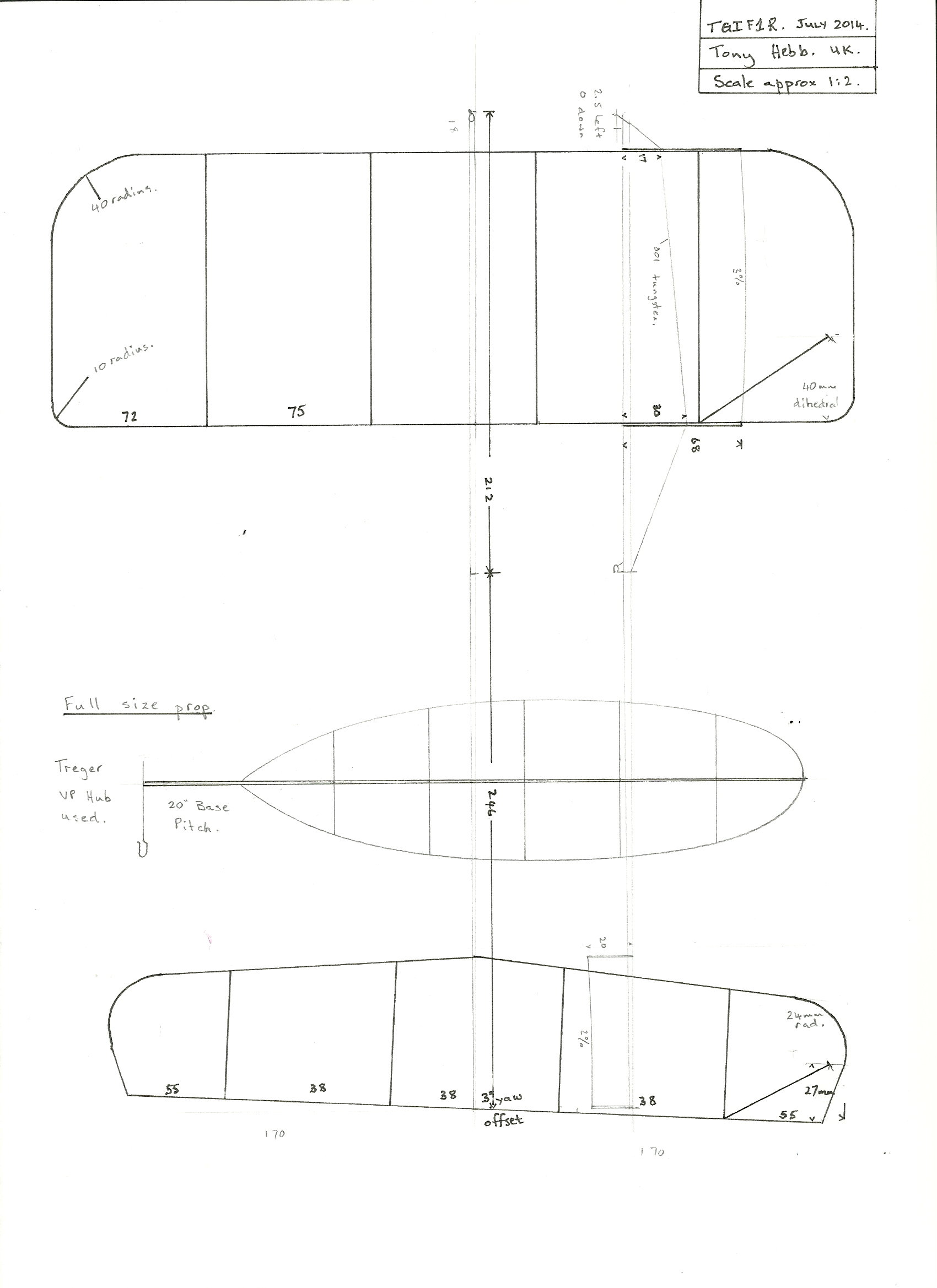
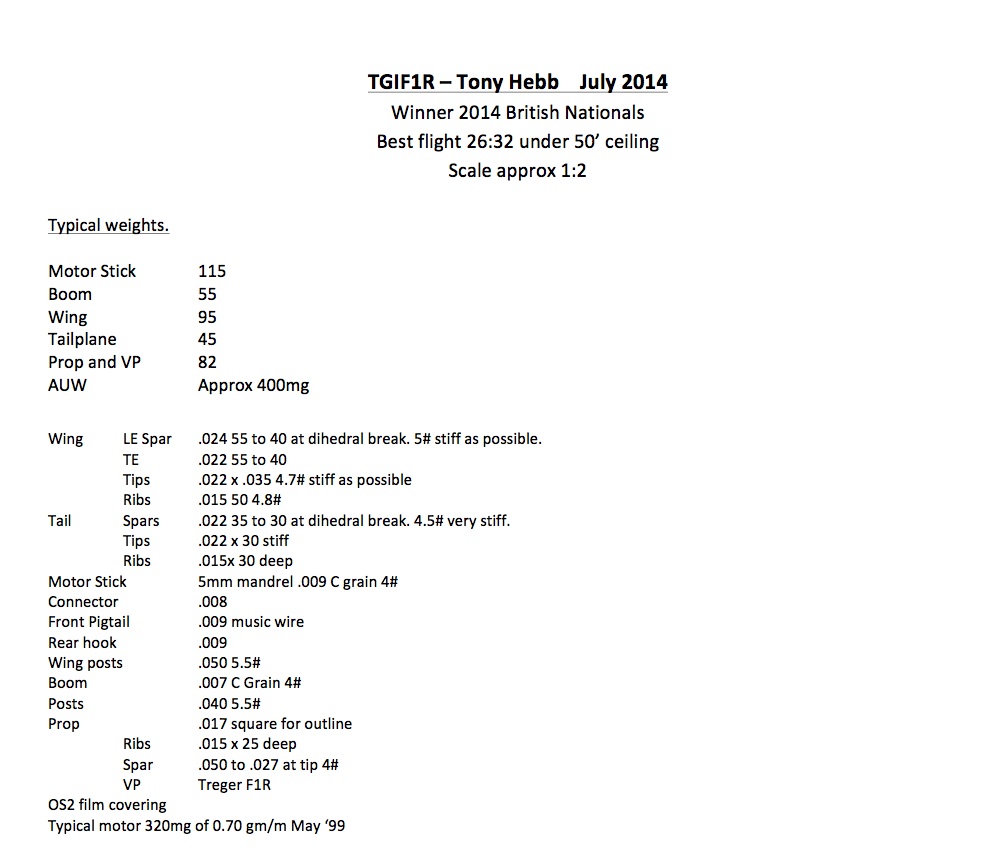
Tony Hebb’s F1R Plan

TGIF1R Plan

Hebb F1R Details

Click here to download a PDF of the plan.

Notes from Tony

The model is really Bob Bailey’s F1R with slightly simpler wing and tail outlines, also Bob flew with his own VP hub whereas mine flies predominantly with a Treger F1R hub which I can wholeheartedly recommend.

For anyone not wanting to use a VP then I would suggest that they use the flaring blade shape from Bob Baileys original model which works well.

All up weight is around 400mg and this is difficult to achieve with OS film whilst still retaining adequate airframe stiffness – so definitely not a beginners model. I still feel that 10 to 20 mg can be shaved off this, but I know I have yet to fly the model to it’s full potential even at this weight.

Best wishes,

Tony

Statuses

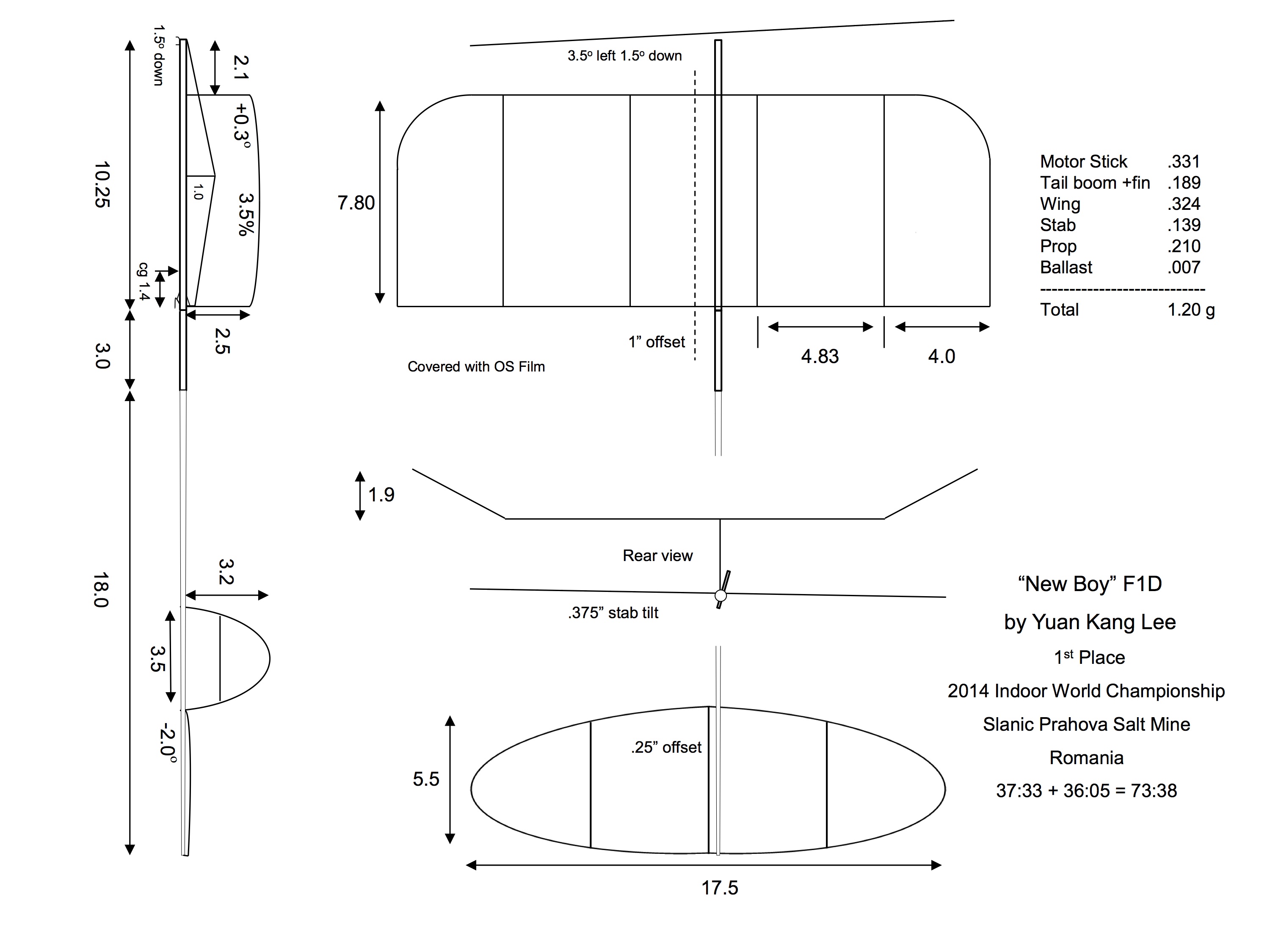
Yuan Kang Lee’s 2014 World Championship F1D

In Uncategorized on August 5, 2014 by nicholasandrewray

Yuan Kang Lee’s 2014 World Championship F1DKang New Boy F1D_final_1Kang New Boy F1D_final_2

Click here to download a PDF of the plan.

DSC_0077

Yuan Kang Lee’s F1D In Flight

Statuses

Nick Ray’s AMA Cat I Record F1D

In Uncategorized on May 23, 2014 by nicholasandrewray

Nick Ray’s AMA Cat I Record F1D

Ray F1DClick here to download a PDF of the plan.

Materials List RevisedClick here to download a PDF of the materials list.

Notes on the Flight

The Cat I record flight was the product of my redeveloped F1D program, which began after the 2012 World Championships in Belgrade, Serbia. I incorporated Lutz Schramm’s work on drag reduction and Ivan Treger’s work on VP design. I chose to design the tail using the guidelines Martin Simon suggests in his book, Model Aircraft Aerodynamics. Mainly, when using a lifting tail, one should design it with all of the considerations due a wing. Although, visually, the model may appear to need a rudder, there is enough dihedral in the tail to facilitate a tight left turn.

Mark Bennett’s 2008 record notes also proved invaluable when trimming the model. I use a spring with 3.5 turns of 0.008″ music wire on a 0.039″ / 1 mm mandrel. This spring allowed me to keep the model off the ceiling for the majority of the flight. Generally, the model reached the ceiling around 4 minutes and continued to climb until approximately six minutes. The model then gradually descended to approximately 12 feet from the floor until 14 minutes, when the model began its second climb. The model climbed back to the ceiling, reaching ceiling height at approximately 17 minutes. The model began its final descent approximately 24 minutes into the flight.

This flight profile would not have been possible without outstanding rubber. I have tried several batches, but only May 99 has been able to deliver a strong second climb. The record flight was made on the third wind of a 9” loop of May 99. I was able to wind to 0.55 in-oz with 1650 turns, and back off to 1625 turns at 0.4 in-oz. I landed with 325 turns. The flight averaged 45.9 RPMs with a minimum of 34 RPMs before the propeller started to change, and a maximum of 53 RPMs during the final climb.

The day of the record flight was very humid and had a high of 75° F. I think warmer, drier weather may lead to slightly improved times. Furthermore, a stiffer spring may allow for the model to stay at the ceiling for the entirety of the flight, rather than wasting energy on multiple climbs. Another direction to explore would be sparless propellers. I have not had much luck with shorter motors, so for the time being I may be stuck with landing with several hundred turns.

l would like to thank Bill Gowen for drafting the plan for the model. He did a superb job rendering the complex curves.

~Nick Ray


photo-2 copy 3

Top View, Taken after the Cat I Record Flight
photo

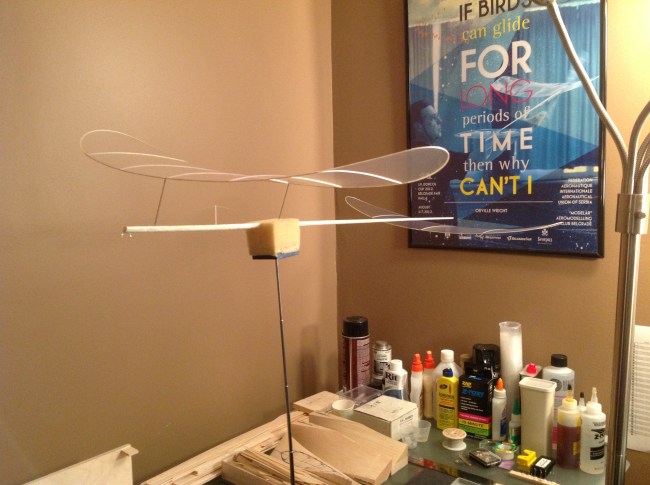
Side View, Taken at the completion of construction

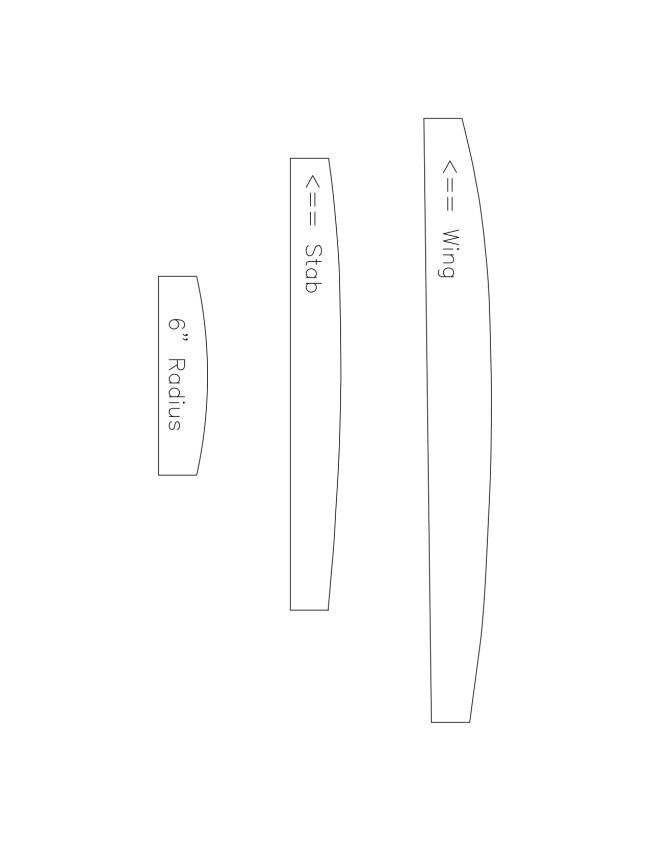
Mike Kirda generously made CAD drawings of my rib templates.
RayTemplates

Click here to download a PDF of the templates.